



The Justice Department’s case against RealPage and several of the country’s largest apartment managers has popularized an ominous-sounding idea: algorithmic collusion. The worry is that software now does what businessmen used to do over lunch at the club. It finds out what rivals charge and quietly makes sure nobody undercuts anybody.
That may be what happened here. The government’s complaint, filed in 2024 and expanded early the next year to name six landlords, alleges that landlords fed RealPage nonpublic, competitively sensitive data. It says the software used that data to recommend rents to their competitors, and that some landlords talked pricing with one another along the way. RealPage denies it, and its settlement with the department contains no admission of wrongdoing. But if an agreement among competitors to stop competing can be proved, a computer’s involvement shouldn’t change the analysis much. Section 1 of the Sherman Act has covered that ground since 1890.
The trouble is that the argument has outgrown the case. California, New York, Connecticut and New Jersey have passed laws restricting algorithmic rent-setting, as have San Francisco, Philadelphia and other cities. Some of those laws reach well beyond the pooling of confidential data. Before the rest of the country follows, someone ought to ask the question that used to discipline antitrust enforcement: What happens to consumers?
Sellers have always tried to figure out what buyers will pay, and for most of history they weren’t very good at it. The merchant knew his regulars, kept an eye on the shop down the street and adjusted as best he could. Then came market research, then spreadsheets, then pricing models of growing sophistication. Today’s algorithms are the latest step in that progression. Mostly they are better than people at digesting a great deal of information quickly.
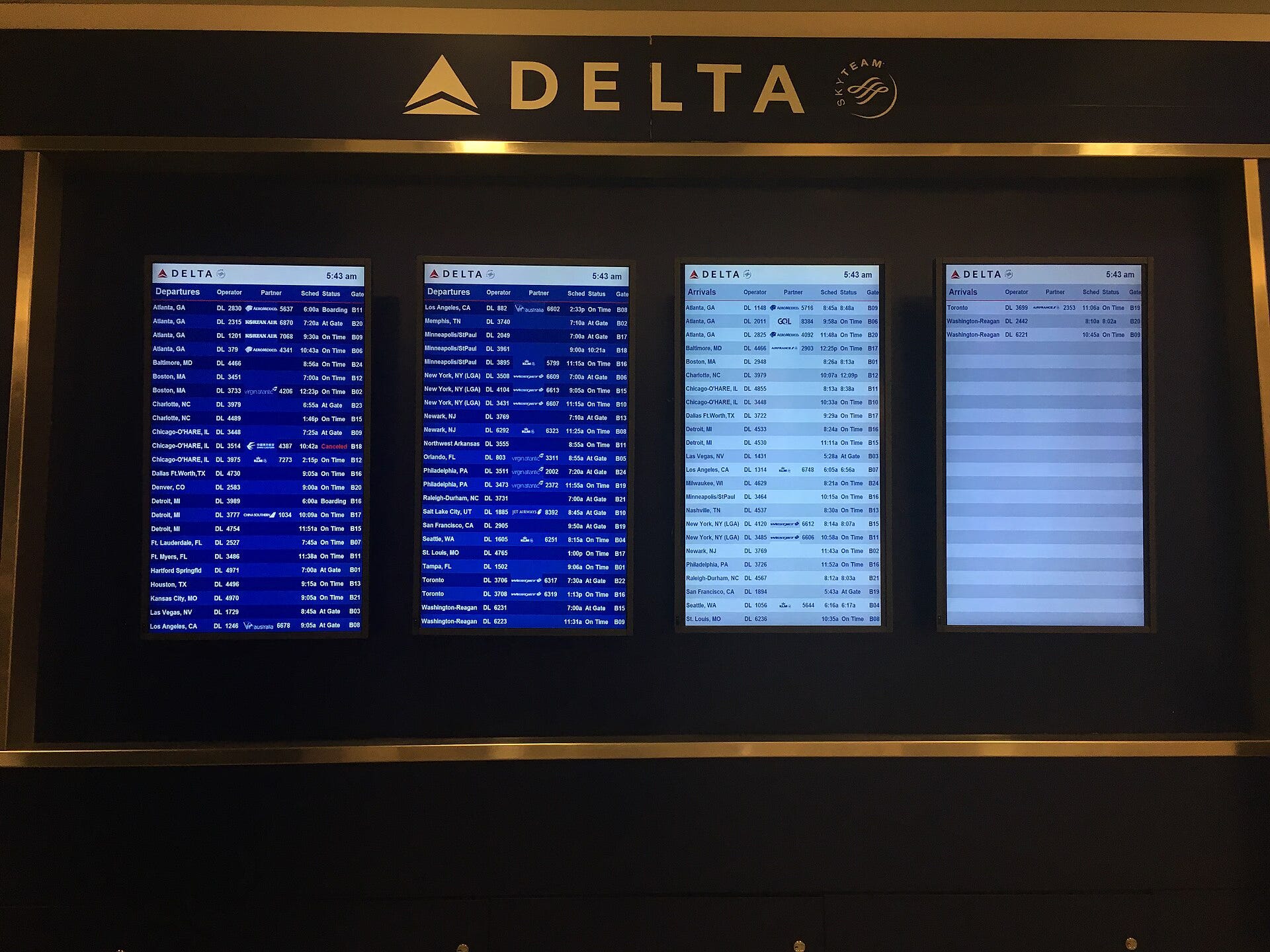
That is not obviously bad for consumers, and airlines show why. A seat becomes worthless the moment the plane pushes back from the gate, so carriers adjust fares constantly to fill planes. Travelers grumble, with some justification, when the fare to Orlando doubles over spring break. They rarely complain about the Tuesday fare that drops because the airline would rather sell a seat cheaply than fly it empty. The same system produces both.
Hotels price rooms the same way. Retailers mark down whatever isn’t moving, and ride-hailing apps raise fares when a rainstorm brings out more riders than there are drivers. None of this is mysterious. Prices are supposed to move when supply and demand move, and that is much of what makes a price system worth having. Software speeds up the process. Say a hotel sees that next weekend’s bookings are soft and cuts its rates, and the hotel across the street notices and matches. No one would call the second hotel a conspirator because its manager looked out the window. Replace both managers with programs that read publicly posted rates and respond within minutes, and the economics are unchanged. The response is faster and more precise, which frequently works to the customer’s advantage.
So far, the courts have agreed. Last year the Ninth Circuit threw out a suit claiming that Las Vegas hotels had conspired by licensing the same pricing software. It held that competitors’ independent decisions to use a common tool do not, by themselves, amount to an agreement.

Critics tend to dwell on the cases where the algorithm says to raise the price. But a tool that only ever pushed prices up would be of little use to anyone. A landlord with vacant units, an airline with empty seats and a hotel with unsold rooms all have strong reasons to cut prices until someone buys. Better information helps them find that number sooner.
This is why consumer welfare analysis matters. That an algorithm sometimes recommends a higher price proves very little; an auction does the same thing whenever two bidders want the same painting. The real question is what the challenged practice does to prices, output, quality and efficiency, taken together. Pricing software can help sellers spot weak demand and cut sooner. It can fill capacity that would otherwise sit idle, connect buyers and sellers who might never have found each other, and signal scarcity in a way that draws in new supply. None of that stops being true because the same tools can be abused.
There is a line here, and antitrust law is equipped to draw it. Competitors may not pour their confidential pricing data into a shared machine to accomplish together what they could not lawfully agree to do face to face. Routing the arrangement through software buys no immunity. The converse matters just as much. Firms that use similar tools have not thereby agreed to anything, even when they arrive at similar prices. Businesses in the same market face the same interest rates, wage pressures, regulations, weather and public information. It would be strange if they never reached similar conclusions.
The department’s own settlements suggest it grasps at least part of this. The RealPage decree is hardly a light touch: it can run seven years and comes with a court-appointed monitor. But it does not ban pricing software. It restricts RealPage to competitors’ nonpublic data that is at least a year old, keeps current lease data out of its models and strips out features alleged to have discouraged price cuts or aligned landlords’ prices. It also bars discussions of nonpublic market trends at RealPage’s user meetings. Whatever one thinks of those terms, they go after the alleged mechanism of coordination rather than computer-assisted pricing itself.
RealPage won’t be the last case of its kind. Artificial intelligence will make pricing tools far more capable, and firms will get better at forecasting demand and adjusting supply, inventory and prices in response. Regulators will be tempted to treat the resulting prices as suspect whenever they rise, or whenever competitors’ prices start to look alike.
Giving in to that temptation would repeat an old mistake. For much of the twentieth century, courts and enforcers condemned business practices that looked suspicious or that hurt particular competitors, often without asking whether consumers were any worse off. The consumer welfare standard replaced that habit with a harder question: What does the practice actually do to competition and consumers? Nothing about software justifies abandoning that question now.
If RealPage and its customers agreed to restrain competition, the government should prove it, and the law already provides the remedy. But where independent firms are simply using better tools to read the market and respond faster, antitrust has no business protecting consumers from the market itself.