



California and eleven other states have settled their antitrust challenge to Paramount Skydance’s acquisition of Warner Bros. Discovery. On September 30, U.S. District Judge Araceli Martínez-Olguín approved the consent decree without adding conditions. The companies expect to close the roughly $110 billion transaction, including debt, on October 6. The settlement shows plainly what state antitrust enforcement is turning into.
Under the decree, the merged company must release at least 30 theatrical films in each of the first two years and 32 in each of the next three. Each year’s slate must include at least four independent films, and at least 20 percent of releases must have budgets of $50 million or more. Paramount must spend $300 million more each year on domestic production than it spent in 2025, at least $1.5 billion over five years. It must also put $5 million a year into a fund to acquire independent films.
If the company misses the annual quota, it gets six months to make up the shortfall. It owes $30 million for every missing picture either way. Half of that goes to Hollywood union health and retirement funds, $12 million goes to the Motion Picture & Television Fund, and $3 million goes to a National Association of Attorneys General fund for antitrust enforcement. If the shortfall isn’t cured, Paramount must sell its 49 percent stake in Miramax. The decree also requires $9.5 million a year for workforce training, career development, film programs and community arts organizations. It bars the sale of either studio lot, and it binds the company to honor existing collective-bargaining agreements and bargain in good faith with entertainment unions.
The decree reaches cable and news as well. For five years, the company must negotiate carriage for the legacy Paramount and Warner basic cable channels separately, with information firewalls between them. A News Editorial Independence Board of five journalists, appointed by the company’s board, will set editorial principles for CBS News and CNN. A monitoring trustee, an internal compliance monitor and a committee of up to five plaintiff states will oversee the rest.
The judge’s approval makes all of this enforceable. It does not tell us what most of it has to do with protecting competition and consumers.
Some provisions do connect to the states’ complaint. Separate cable negotiations and firewalls respond to the allegation that the combined company would have too much leverage in licensing basic cable channels. A release minimum responds, at least on its face, to the claim that combining two studios would reduce theatrical output. These are behavioral remedies rather than structural ones, and they may prove cumbersome, but antitrust lawyers would recognize them.
The other terms are harder to defend that way. Domestic production spending, payments to an industry charity, union benefits, job training, arts grants, studio-lot guarantees and a court-ordered editorial board do not preserve competition in any economically defined market. They advance state economic, labor and media policy. Whatever their merits, those decisions ordinarily belong to legislatures, not to attorneys general bargaining over permission to close a merger.
That is the fifty-state antitrust paradox. State attorneys general can correct federal mistakes and vindicate real local injuries. But a handful of states can also use the threat of delay to write rules for an entire industry, steer benefits to favored constituencies and impose their preferences on consumers in other states. Until now that was mostly a theoretical worry. Paramount has turned it into an enforceable federal consent decree.
Corporate antitrust lawyers used to work from a simple map. When national companies merged, the Federal Trade Commission or the Justice Department made the decision that mattered. State attorneys general might join the investigation, contribute local knowledge, seek damages for their residents or press for extra terms. Washington led and the states mostly followed.
That map no longer works. Recent legal commentary has carried headlines like “State Antitrust Enforcement Enters a New Era” and “The State Antitrust Risk You Are Not Pricing Into Your Deal.” State attorneys general have built up the staff, money, information and procedural tools to run their own antitrust policy. They increasingly use them even after federal regulators have settled a case or cleared a deal.
The result is an open argument over who makes national competition policy. Colorado Attorney General Phil Weiser describes state enforcement as a necessary check when Washington is unwilling, mistaken or politically compromised. Associate Attorney General Stanley Woodward answered him two days later in a Fordham speech titled “Antitrust Federalism.” Woodward does not deny that states have a role. His argument is that Congress gave federal enforcers the lead when a transaction affects the whole country. He put it directly: “When a merger harms local markets, we want the states in the room. When it is national, we expect to lead.” The law needs to draw that line more clearly.
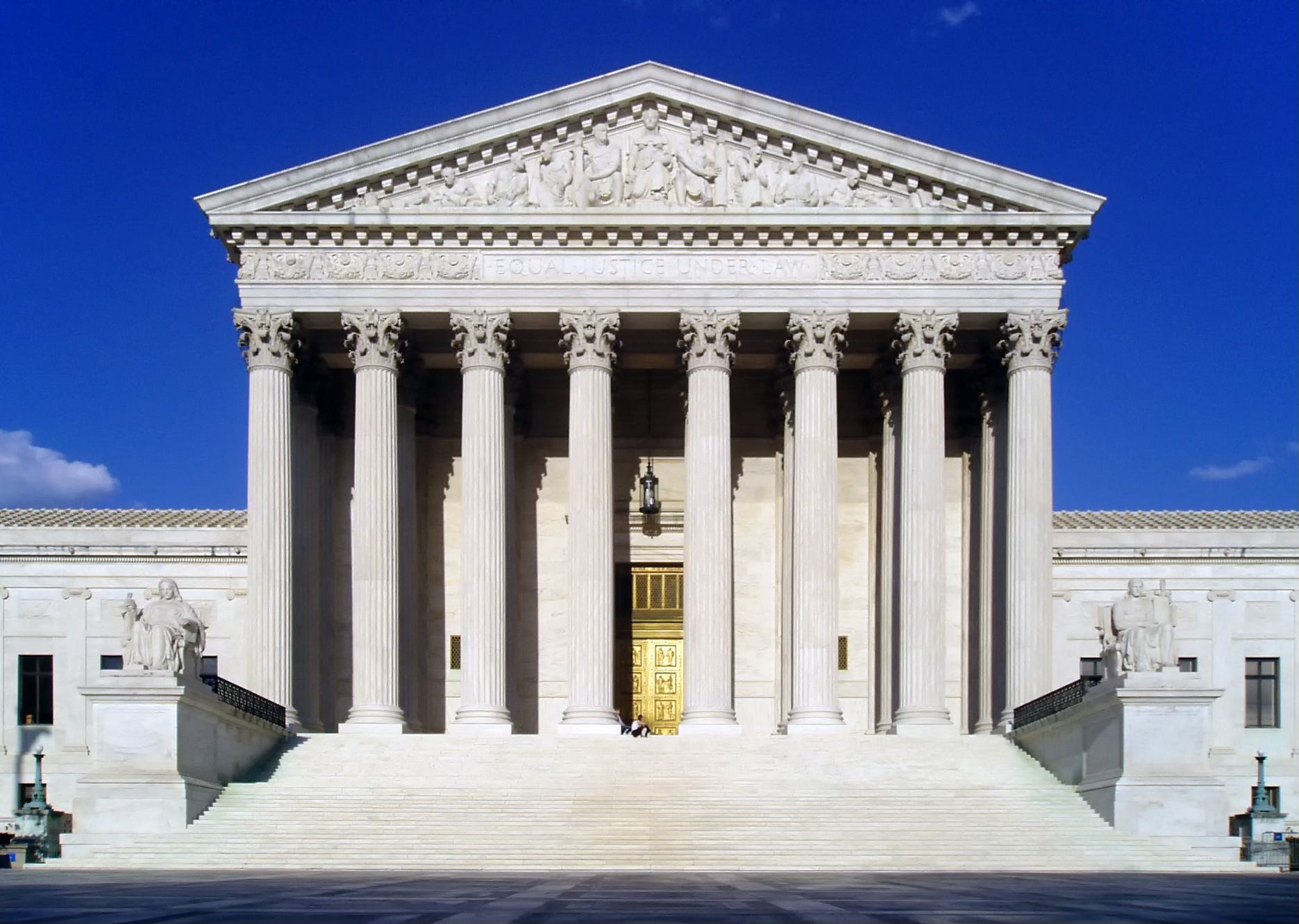
State antitrust authority is not new. States have long been able to sue under their own laws and, in some circumstances, under federal law. The Hart-Scott-Rodino Act of 1976 authorized state attorneys general to seek damages on behalf of residents. In 1990, the Supreme Court held unanimously in California v. American Stores that a state suing under Section 16 of the Clayton Act could seek divestiture. Federal clearance of a merger is not a judicial judgment and has never protected a transaction from a separate public or private challenge.
What has changed is the states’ ability to spot deals early, litigate on their own schedule and turn local priorities into national consequences. In 2022, the State Antitrust Enforcement Venue Act exempted federal antitrust cases brought by state attorneys general from multidistrict-litigation consolidation. Washington and Colorado have adopted a uniform premerger-notification law that gives their attorneys general copies of federal Hart-Scott-Rodino filings when a deal has enough connection to the state. California has passed its own version, which takes effect in 2027. These laws generally impose no second waiting period and require no state approval. They give state enforcers early notice, which they used to lack.
The states have also built the capacity to act on that notice. New Jersey created a dedicated Antitrust Litigation and Competition Enforcement Section. Oregon expanded its antitrust unit. State enforcers share expertise, hire outside counsel for hard cases and form coalitions that can match the federal government in litigation. A July 2026 Skadden review of the National Association of Attorneys General database counted seven state antitrust actions already filed that year, more than in either of the two preceding full years.
Paramount shows the new arrangement at full strength. The Justice Department spent eight months reviewing the acquisition and collected more than two million documents from more than 80 custodians. Under company waivers, state offices attended the department’s depositions and shared information with it. On June 12, the department issued an unusually detailed statement concluding that the merger was unlikely to harm consumers in streaming, linear television or theatrical distribution and would likely increase competition across the media industry.
A month later, California and eleven other states sued under Section 7 of the same Clayton Act. They alleged that the combined company would hold about 27 percent of wide-release theatrical distribution and of basic-cable licensing, and roughly 30 percent of a proposed market for anticipated blockbusters. The judge temporarily barred the deal from closing, and Paramount then agreed not to close while the case proceeded toward a March 2027 trial. Meanwhile, the merger agreement required Paramount to pay Warner shareholders a “ticking fee” of 25 cents per share per quarter once September 30 passed, roughly $7 million a day.
That clock gave the states enormous leverage. California officials also worried that Paramount might move production and jobs out of the state. In the resulting bargain, Paramount keeps its cable channels and completes the merger. California gets production spending and protection for its studio infrastructure. Unions and arts organizations get money. The state coalition gets five years of oversight, and the attorneys general get reimbursement of up to $40 million in legal and expert fees plus a share of any penalties to fund future enforcement.
Consumers may benefit from some of this. More films could mean more choice, and separate cable negotiations may keep the merged company from using all its channels as one bargaining bloc. But an output quota is a crude substitute for competition. It counts pictures without asking whether audiences want them, whether they make economic sense, or whether new distributors and production technologies are making the old studio model less important. A commitment that looks sensible in 2026 may be obsolete well before the decree expires at the end of 2031.
The editorial board is further still from the economic injury the states pleaded. Protecting the independence of CNN and CBS News may be a legitimate public concern. But the board exists only because state prosecutors wrote it into a court order governing two national news organizations. Colorado and Washington, both plaintiffs, declined to sign on to those terms. Antitrust law gives no one a general commission to supervise political balance, journalistic objectivity or newsroom management. And a government-negotiated board meant to protect editorial independence invites an awkward question: independence from whom?
The penalty provision is circular. A company accused of threatening competition must pay $3 million per missing film into a fund that helps attorneys general bring more antitrust cases. The rest goes to union benefit plans and an industry charity. The penalty may encourage compliance, but where the money goes shows that the settlement serves institutional and local interests alongside whatever it does for moviegoers.
Iowa and Montana have asked the Supreme Court for permission to sue the twelve plaintiff states directly. They argue that a minority of states effectively vetoed a transaction that the United States, the other thirty-eight states and regulators abroad declined to challenge. The settlement has probably made that original-jurisdiction action moot. California itself told the Court that once the decree took effect, Iowa and Montana would have everything they asked for. But the filing still matters. It shows that state antitrust enforcement has become powerful enough to set states against one another over who speaks for consumers nationwide.
Woodward’s speech lays out the legal structure underneath that dispute. Section 15 of the Clayton Act lets the United States seek an injunction without proving injury to itself, because it represents the national public interest. States seeking federal injunctive relief proceed under Section 16 and, like private plaintiffs, must show threatened injury to their own interests. In 1914, Congress considered and rejected a proposal to let state attorneys general enforce federal antitrust law in the name of the United States. The Hart-Scott-Rodino Act later gave premerger notice and a preclosing review period to two federal agencies, not fifty state offices.
These distinctions do not strip states of concurrent authority. They show that Congress assigned different roles to different sovereigns. A state represents the interests of its own citizens. The United States has to weigh costs and benefits for the whole country, especially when a transaction’s effects fall unevenly. Woodward goes back to the Articles of Confederation to make the point: the federal commerce power was partly the Framers’ answer to states pursuing conflicting economic policies at one another’s expense. Letting one coalition decide the fate of an indivisible national transaction brings back that coordination problem.
Nobody should treat a Justice Department clearance as a papal bull. Federal agencies make mistakes, bend to politics and sometimes settle too cheaply. States must remain free to challenge a deal when they can prove competitive injury. But state plaintiffs should not act as though a contrary national investigation never happened. The Paramount states had access to much of the same record and invoked the same federal statute. The settlement points to no economic error in the federal analysis. It replaces adjudication with a five-year regulatory program whose benefits go mainly to California and the enforcing states.
Live Nation is a useful counterexample. The Justice Department, joined by a large coalition of states, accused Live Nation and Ticketmaster of monopolizing parts of the live-entertainment business. A week into trial, the department settled. Thirty-three states and the District of Columbia refused to go along and kept litigating. In April, a jury found Live Nation and Ticketmaster liable on the states’ claims. Whatever remedy the court adopts, the verdict shows why independent state authority matters. A federal settlement is not the same thing as consumer protection, and states sometimes carry a sound case to judgment when Washington will not.
The consumer welfare standard supplies the discipline this requires. For nearly half a century it has tied antitrust enforcement to economic evidence and administrable rules. My father, Robert Bork, popularized it. It was never a demand for weak enforcement. It asked enforcers to protect competition and consumers rather than favored competitors or political constituencies. Antitrust should not be used to preserve a preferred number of jobs, set an annual movie slate, fund local programs or police speech unless those measures directly remedy proven harm to competition.
The political danger runs in both directions. Democratic attorneys general may use antitrust to pursue media, technology or labor goals. Republican attorneys general have sued asset managers, claiming their climate-related coordination reduced coal output and raised energy prices. Either theory might describe real competitive harm. Neither deserves a presumption of validity because its politics are congenial. Prices, output, quality, innovation and consumer choice should decide cases, not the defendant’s identity or who is applauding from the sidelines.
State enforcement should stay. What it needs is a clear line between local competitive injury and national policymaking, and more discipline when state action has nationwide effects. States that challenge a merger after a reasoned federal clearance should publish their economic case: the relevant market, the injury to their residents, what the federal analysis missed and why a nationwide remedy is needed. A federal conclusion should not confer immunity, but courts should give a fully explained federal determination appropriate weight. Time-sensitive mergers need prompt review, and judges should weigh the actual cost of delay when setting schedules, bonds and interim relief.

The same method shows up outside antitrust, which is why the legal theory matters less than the technique. In August, 51 attorneys general, Republicans and Democrats alike, settled consumer-protection and children’s-privacy claims against Meta for up to $17.1 billion and a nationwide code for minors on Facebook and Instagram. This was no minority veto; the coalition was nearly unanimous. But Meta’s payment rises from about $12.2 billion to the full amount only if TikTok, YouTube and Snapchat accept comparable terms. That makes one consent decree a template for an industry standard no legislature enacted. It also has a competition cost. Meta can absorb a dense compliance regime that a smaller challenger might not, so a settlement meant to discipline the dominant firm can end up protecting it.
Settlements need discipline too. Every provision should be tied to the competitive injury alleged, with an explanation of how it protects consumers. Settlement money should not finance the offices that negotiated it. When an attorney general starts writing detailed prospective rules for an entire industry, the legislature should take over. Rules of general application belong in statutes and regulations, not in consent decrees negotiated under multibillion-dollar pressure.
Congress may eventually need to draw a brighter line. Woodward notes proposals to assign large national transactions exclusively to federal enforcers and local ones to the states. Judge Richard Posner went further and argued for curtailing state antitrust authority in favor of a single national enforcer. That may go too far. But after Paramount, it is hard to keep assuming that more enforcers always mean more protection. Sometimes they do. Sometimes they mean more politics, more delay and more economic regulation made through litigation.
State antitrust enforcement earns its keep when it catches federal mistakes and protects consumers from real competitive harm. It becomes dangerous when redundancy turns into multiplication and multiplication into a veto. The Paramount settlement does more than let a merger proceed. It sets movie quotas, directs domestic investment, sends money to favored institutions and puts two newsrooms under an oversight structure negotiated by state prosecutors. That is a great deal of policy to extract from Section 7 of the Clayton Act. Fifty enforcers can be a safeguard, but they should all answer to the same test: did the conduct harm competition and consumers, and does the remedy address that harm? A court order can make a consent decree binding. It cannot turn movie quotas, labor subsidies, arts grants and newsroom governance into consumer welfare.