


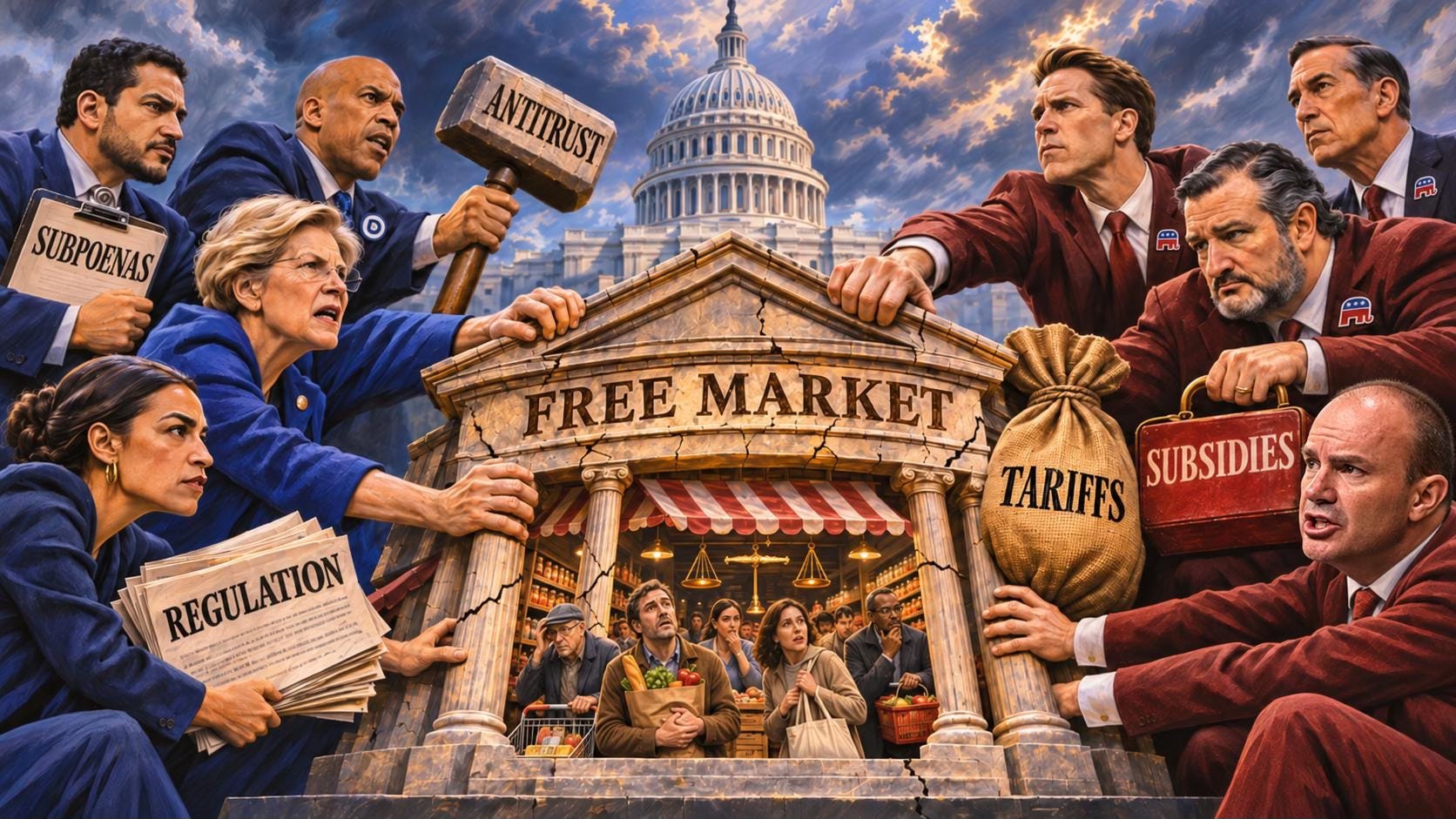
The Democrats have captured Congress, and Donald Trump is once again about to discover the pleasures of divided government. His legislative agenda will be largely at the mercy of his opponents, his judicial nominees will face a hostile Senate gauntlet, and congressional investigators will have two years to take a proctoscope to virtually every corner of his administration. Subpoenas will fly, executives will be summoned to Capitol Hill, and Washington lawyers can look forward to increasing their billable hours.
All of this is predictable. Less predictable, and considerably more important, is what the election will mean for the American economy and the rule of law.
The Democrats' victory comes at a peculiar moment in American political history. The progressive left has largely abandoned the idea that competition, rather than government direction, should determine economic outcomes. It regards corporate size with suspicion, profits as evidence of exploitation, and markets as mechanisms that must be supervised to produce socially desirable results. Meanwhile, a growing faction of the Republican Party has developed its own appetite for industrial policy, tariffs, subsidies, and political intervention in private business decisions.
The parties have very different ideas about what the economy should look like. They are becoming less different in their willingness to have Washington decide.
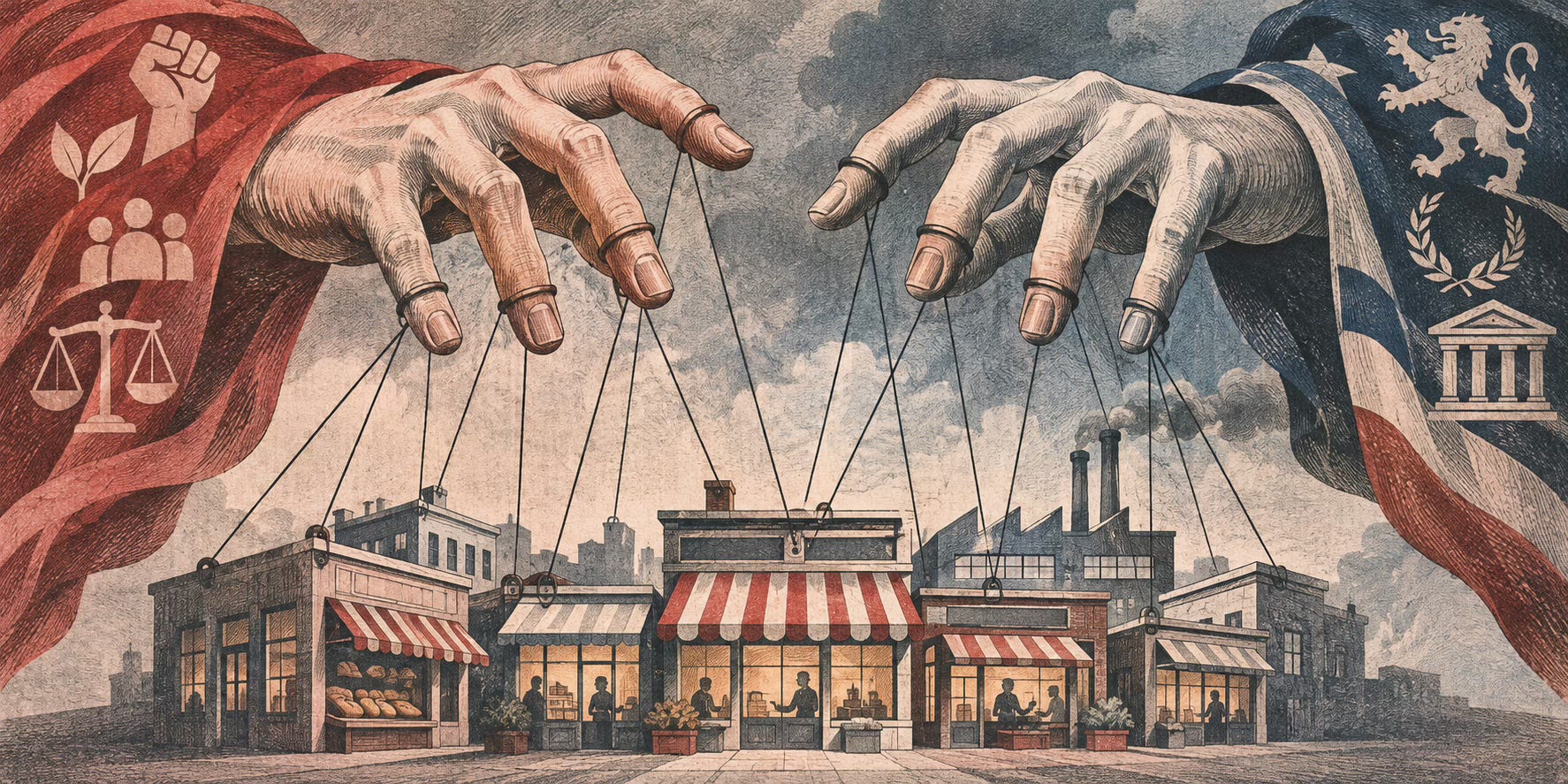
This is a larger problem than the familiar argument over big government. It concerns the purpose of law and the limits of political authority. Are businesses to operate under general, reasonably predictable rules, competing for customers and investors on the merits of their performance? Or are they to discover, administration by administration and committee by committee, which economic activities Washington approves of, and which will invite punishment?
What’s Getting Lost — The Consumer
My father spent much of his professional life explaining why the second approach was particularly destructive in antitrust law. His arguments have acquired a relevance well beyond antitrust.
When Robert Bork published The Antitrust Paradox in 1978, American antitrust law was trying to accomplish an assortment of objectives that often contradicted one another. Courts sought to preserve small businesses, prevent concentration, protect existing competitors, and encourage competition. The trouble was that protecting competitors often required suppressing the very competition the law was supposed to encourage.
An efficient company that lowered prices and took customers away from less efficient rivals might be accused of threatening competition. A merger that promised lower costs and better products might be condemned because it reduced the number of firms in an industry. Courts were left to reconcile objectives that could not be reconciled, producing decisions that were frequently unpredictable and economically perverse.
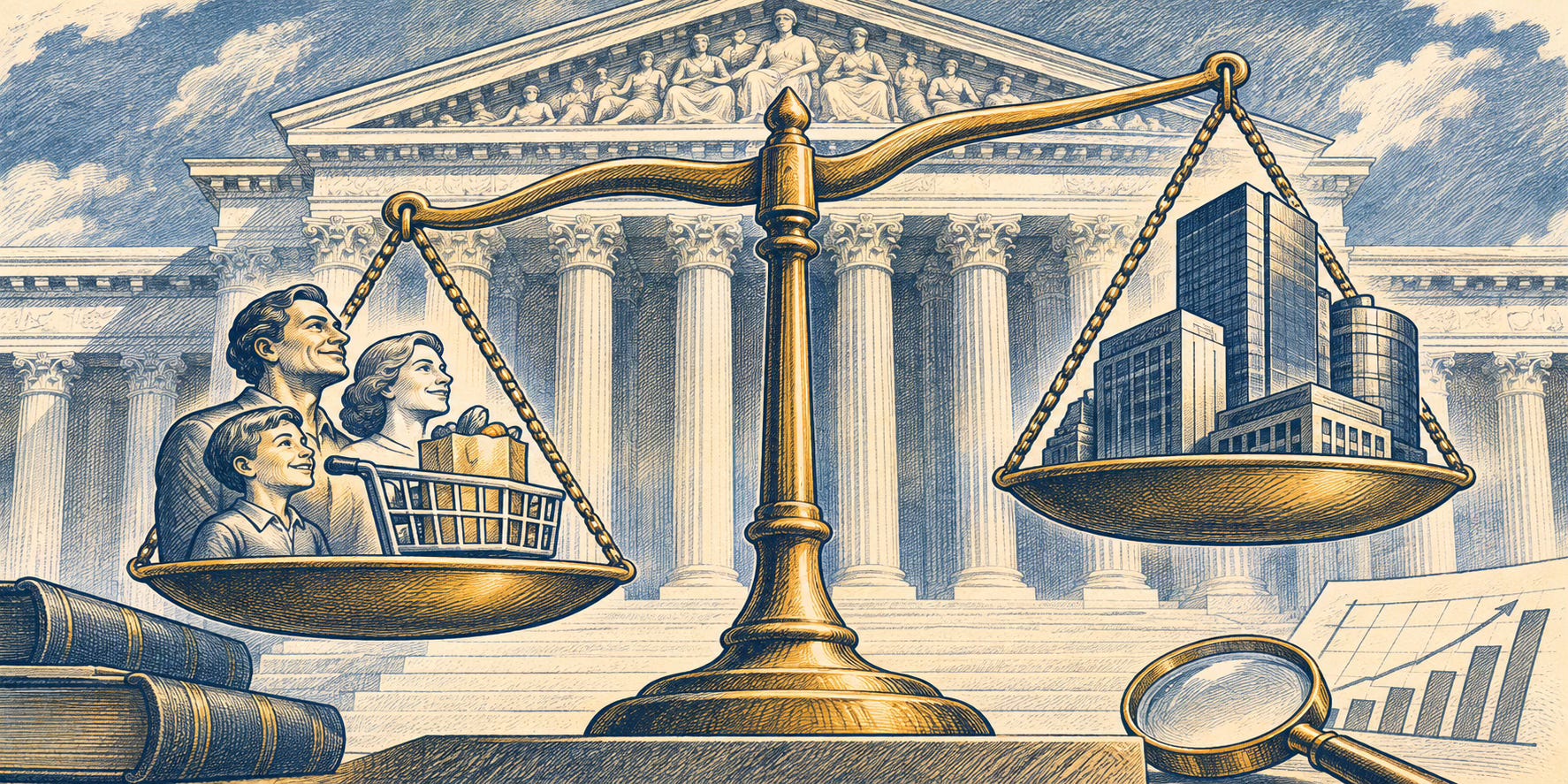
Bork argued that antitrust needed a coherent objective grounded in economic analysis. The consumer welfare standard supplied that objective. Properly understood, it directs attention to economic efficiency and the competitive process rather than the fortunes of particular businesses or the political preferences of regulators. It does not mean that every large company is benign, that every merger should be approved, or that anticompetitive conduct should escape punishment. It means that the government must demonstrate a genuine competition problem rather than simply announce its displeasure with an economic outcome.
Such distinctions are increasingly lost in Washington.
What’s Coming
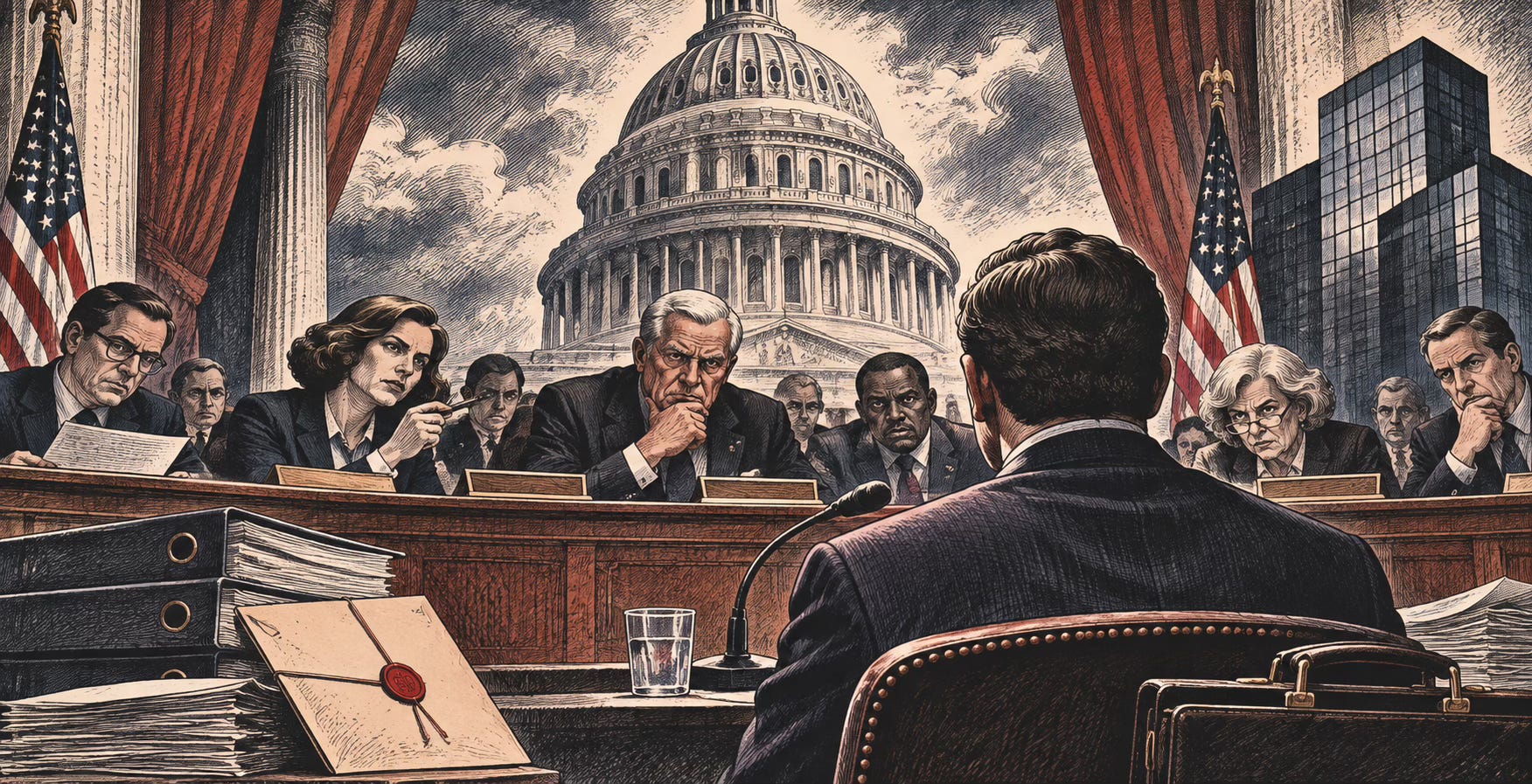
Consider what awaits corporate America when the new Congress convenes. Democratic committee chairmen will have the authority to subpoena executives, demand internal documents, and investigate industries they believe are charging too much, earning too much, or exercising too much economic power. Amazon, Google, Meta, and Apple will be obvious targets, but banks, pharmaceutical manufacturers, airlines, insurers, energy companies, and grocery chains should not expect to escape attention.
Some investigations will be warranted. Companies do sometimes collude, exclude competitors unlawfully, deceive consumers, or otherwise violate the law. The government has a legitimate responsibility to investigate such conduct. The problem arises when an investigation begins with the assumption that size, profitability, or an unpopular price is itself evidence of wrongdoing.
A successful business is not necessarily — or even usually — an antitrust violator. High profits can reflect innovation, efficiency, risk-taking, or superior products. Rising prices can result from increased costs, supply constraints, or changes in demand. A merger may eliminate a competitor while making the combined enterprise a more effective rival to a dominant incumbent. These possibilities do not establish innocence, but they do require investigation rather than presumption.
Congressional hearings are not particularly well suited to these distinctions. A member of Congress has five minutes to establish that a corporate executive is a villain. The executive has approximately thirty seconds to explain a complicated economic relationship before being rudely interrupted. The resulting exchange becomes a TikTok clip, and the economic analysis is left for another day.
Even when the company eventually prevails in court, the reputational damage may already have been done. Congressional investigations can impose substantial costs without establishing a violation of law, which makes them an attractive instrument of political pressure.
The consequences for antitrust could be substantial. Progressive lawmakers have spent years attacking the consumer welfare standard as too narrow. They want antitrust to address inequality, labor conditions, the survival of small businesses, political influence, and the concentration of corporate power. These may be legitimate subjects of public concern, but assigning them all to antitrust would recreate the confusion Bork sought to eliminate.
Suppose a merger will reduce production costs, improve products, and create a stronger competitor to an established market leader, but will also eliminate an independent firm. Should it be approved because competition and consumers are likely to benefit, or prohibited because policymakers prefer an industry with more independent businesses? Once the law is expected to pursue both objectives, there is no principled way to resolve the conflict without deciding which political preference should prevail.
One hopes that the incoming Texas governor, Gina Hinojosa, will value the investment in jobs and tax revenue that Elon Musk’s companies bring to her state. But the pressure on her to use various regulatory means to punish him for exercising his First Amendment rights in the last election will be intense — even if Musk did ultimately wind up wasting half-a-billion dollars on flawed candidates.
The same problem arises when a successful company gains market share by offering lower prices. Competition necessarily produces winners and losers. It does not guarantee that every competitor survives or that industries retain a politically acceptable number of firms. An antitrust policy that tries to guarantee those outcomes must interfere with the process it claims to protect.
Democratic control of Congress will not automatically change the law. Trump retains his veto, and his administration will continue to direct federal antitrust enforcement. But hearings, legislative proposals, budget negotiations, and political pressure can influence enforcement priorities and the larger debate over what antitrust is supposed to accomplish. The consumer welfare standard may remain formally intact while its underlying principles are steadily weakened.
Jokers to the Right

It would be comforting to regard this as an exclusively Democratic problem. Unfortunately, Republicans have been busy developing their own theories of government-directed economics.
Tariffs are imposed to protect favored domestic industries. Subsidies encourage investment in businesses Washington considers strategically important. Politicians threaten companies over their international operations, investment decisions, and cultural positions. Government ownership interests and special control rights in private enterprises, once associated primarily with the interventionist left, have found advocates on the right.
Mark Davis and I have described this tendency as “conservative socialism.” The phrase is deliberately provocative, but the underlying point is serious. Conservatives who once argued that markets allocate resources more effectively than politicians increasingly seem to believe that markets need political supervision to produce the right national outcomes.
The left may want corporations to advance environmental, labor, or redistribution objectives. The nationalist right may want them to favor domestic production, particular industries, or an administration's conception of the national interest. These are different objectives, and the differences matter. But both approaches invite government to substitute political preferences for the choices of consumers, investors, and businesses.
The resulting inconsistency is difficult to defend. A company should not receive favorable antitrust treatment because its executives support the president, nor should it face more aggressive enforcement because they oppose him.
Republicans who object to progressive interference in private enterprise ought to recognize the danger from their own side. The economic consequences do not become benign because the politicians issuing the instructions are wearing red ties.
The Judicial Bulwark Erodes
The election will also have important consequences for the federal judiciary. A Democratic Senate can delay or reject Trump's judicial nominees, and a Supreme Court vacancy could produce a prolonged confrontation over confirmation. Democrats may pursue legislation and investigations involving judicial ethics, recusals, and the institutional authority of the Court.
These are legitimate constitutional powers, but their exercise will inevitably revive the argument over the proper role of judges. My father's concern with judicial restraint was closely related to his concern with antitrust. In both areas, he believed that judges should apply legal principles rather than use the law to impose their preferred social arrangements.
An antitrust judge who decides that an industry has become too concentrated because he dislikes large corporations is exercising a kind of discretion not altogether different from that of a constitutional judge who substitutes his preferred policy outcome for the meaning of the law. The problem is not that judges have values. Everyone does. The problem is allowing those values to displace the legal standards they are obligated to apply.
Conservatives are no more immune to this temptation than progressives. Judicial restraint is a principle worth defending precisely when it produces results one dislikes.
“Affordability" as a Gateway Drug to More Regulation
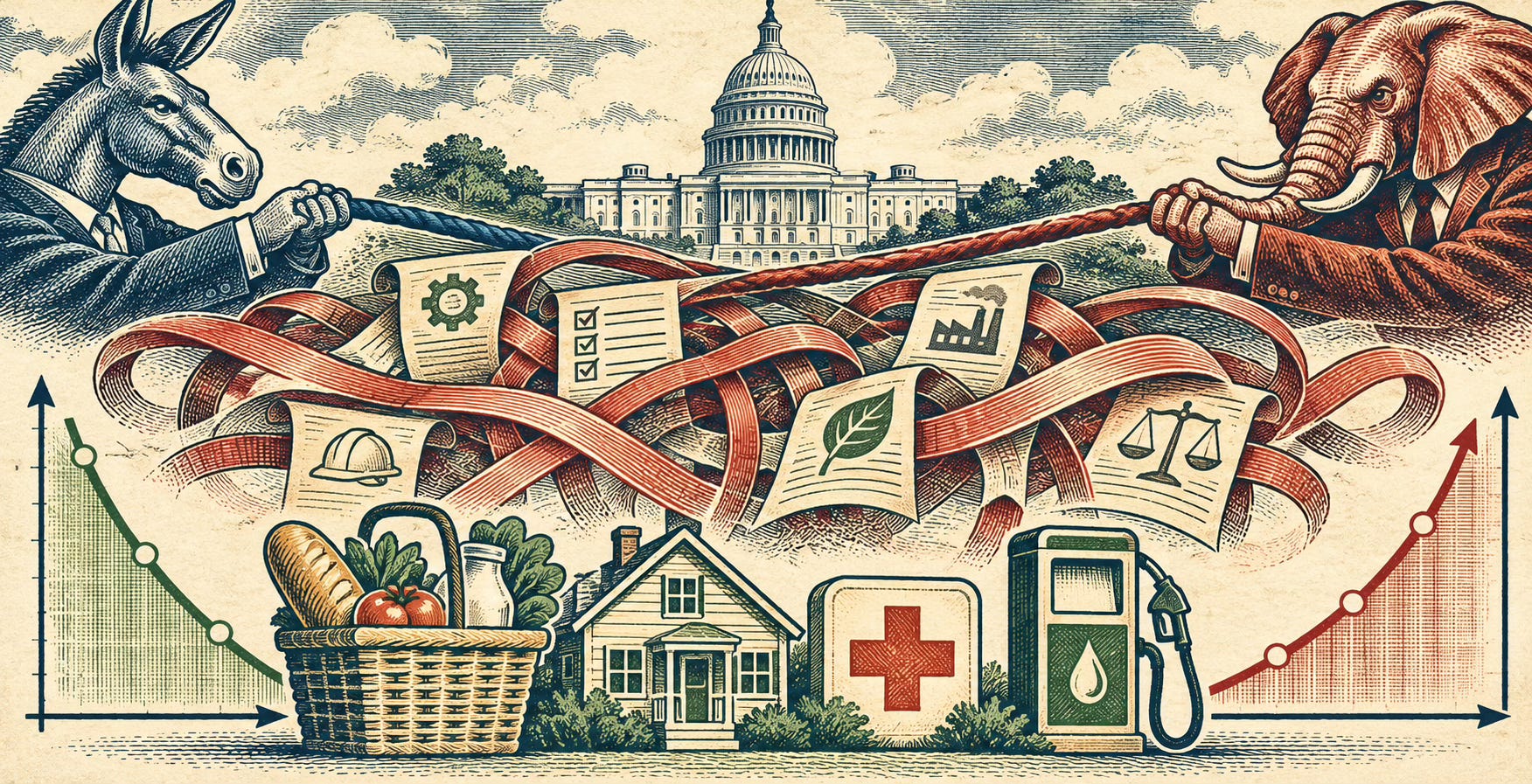
The Democrats' victory will also renew demands for government action against high prices. Housing, groceries, healthcare, insurance, and energy have become central political concerns, and politicians have discovered that blaming corporate greed is considerably easier than explaining economics.
Businesses generally seek profits. They did so when inflation was low, and they did so when it was high. The existence of profit-seeking cannot, by itself, explain why prices change. To understand that, one must examine supply, demand, production costs, productivity, monetary conditions, and competition.
Housing offers an instructive example. In many communities, zoning restrictions, permitting requirements, and other government-imposed barriers constrain construction and contribute to higher prices. Yet the political response is often to propose even more controls on landlords and developers rather than remove the obstacles that prevent more homes from being built.
Government restricts supply, prices rise, and politicians accuse private enterprise of failing to make goods affordable. The proposed remedy is frequently more government intervention.
Democrats may respond to affordability concerns with additional regulation, price-control proposals, or taxes on selected businesses. Some measures could address genuine market failures. Others would discourage investment and production, making the original problem worse. Republicans who impose tariffs and then complain about consumer prices — those damned Canadians! — should be subjected to the same economic scrutiny.
Neither party can repeal the laws of supply and demand, although both seem periodically inclined to try.
A House Divided
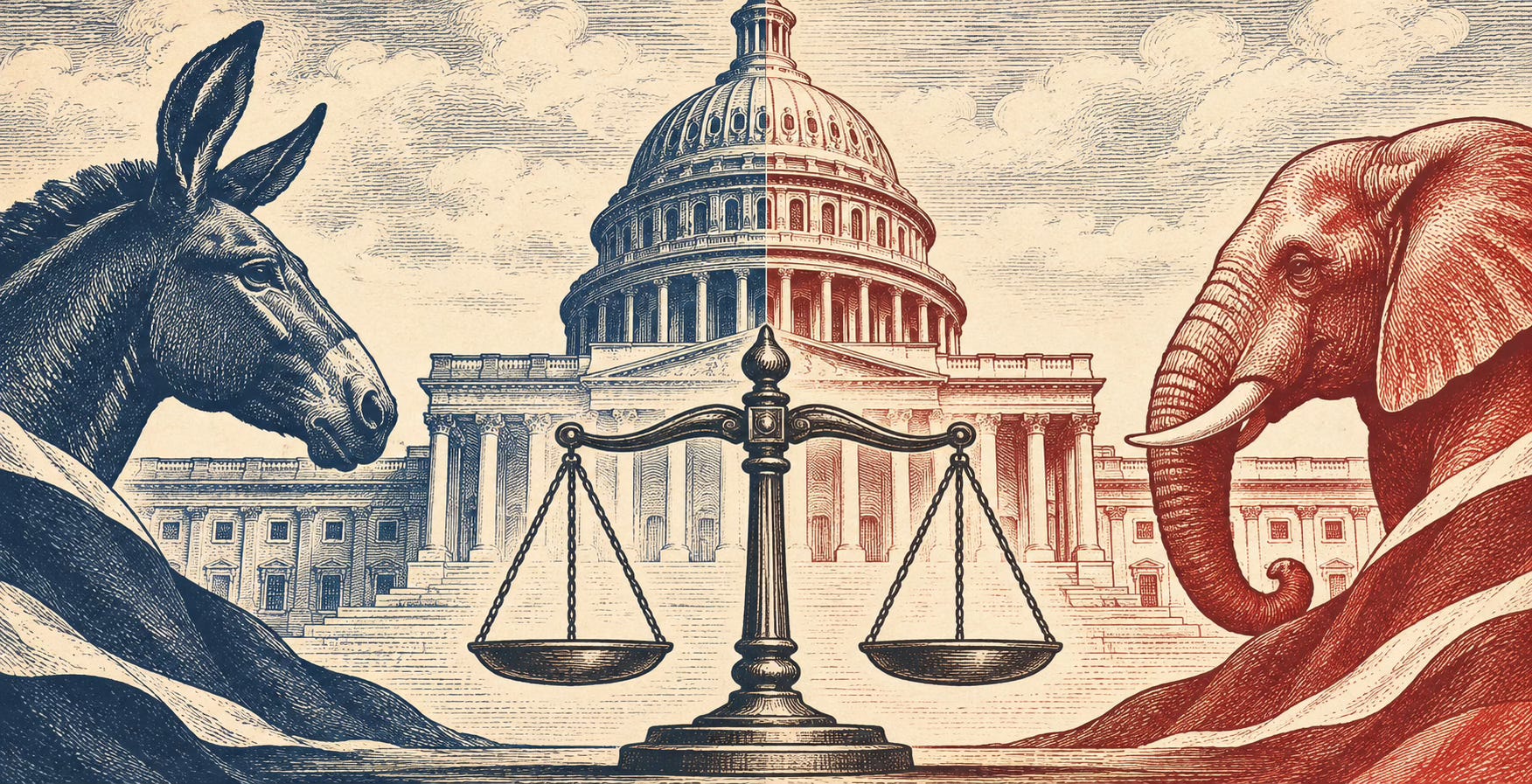
There is, of course, a case for divided government. The Constitution was designed to make the exercise of federal power difficult. Bicameralism, separation of powers, and the presidential veto force political actors to negotiate and prevent temporary majorities from imposing their entire programs on the country. A Democratic Congress will restrain Trump's ambitions, perhaps even his tariffs that the U.S. Supreme Court cannot seem to strike down, while the president's veto will restrain Democratic legislation.
That arrangement is not necessarily a failure of government. It is part of the constitutional design.
But divided government can also encourage politicians to seek alternative ways to exercise power. Presidents rely more heavily on executive orders. Agencies stretch statutory authority. Congress uses investigations and appropriations to pressure private actors. States pursue their own regulatory agendas, and courts are asked to resolve disputes that elected officials cannot settle.
We can end up with a government that passes fewer laws while exercising more discretionary power.
For businesses, the distinction is important. A reasonably predictable legal system allows companies to invest, innovate, and compete with some confidence about the rules. A system increasingly governed by executive discretion, administrative improvisation, and congressional pressure makes political relationships more valuable and economic performance less decisive.
When cultivating Washington becomes more important than satisfying customers, something has gone badly wrong.