



I committed two offenses in The Washington Post this week. First, I argued that high prices are not, by themselves, proof of an antitrust violation. Second, I did it under the name “Robert Bork.”
For a remarkable number of readers, the second offense disposed of the first. The comments included “Nepo baby,” “A dope begat a dope,” “The manure is always next to the tree,” and the wonderfully economical “NO READ.” Others explained that anything written by a Bork could be rejected without the tiresome formality of reading it. Several readers confused me with my father, who died in 2012, and expressed surprise that I was still alive. At least they were relieved to learn that one of us is.
Jeff Bezos was also tried and convicted. My essay, according to the comments, had been ordered by Amazon, the Federalist Society, the oligarchy, or perhaps all three on a conference call. The Post was accused of rummaging through the gutter, scraping the bottom of the barrel, and converting itself into a Bezos propaganda sheet. None of this was supported by evidence, but that was unintentionally appropriate. My essay was about the danger of reaching conclusions before finding evidence.
Then came the great verb controversy. Several readers insisted that the headline should have said the FTC ought to have “chucked,” not “shucked,” the Biden antitrust playbook. I did not write the headline, although I rather like the agricultural pun in an essay about eggs and beef. In any event, the headline police displayed more interest in one consonant than many of their neighbors displayed in Section 1 of the Sherman Act.
This is not a complaint that readers were rude. Anyone who writes an opinion piece should be able to survive the discovery that strangers on the internet do not admire him. Nor do I object to criticism of my father. He welcomed serious argument and supplied plenty of it himself. But “your father” is not an antitrust doctrine, “Bezos” is not an economic analysis, and “fascist” is not a substitute for identifying a relevant market, an agreement, exclusionary conduct, market power, or consumer harm.
Still, buried among the insults were several arguments worth answering. They concern actual collusion in the egg industry, the relationship between concentration and prices, the role of merger enforcement, the difference between free markets and unregulated markets, corporate profits, investigations, and crony capitalism. Those readers deserve a response because they did what critics are supposed to do: they engaged the argument rather than the author’s birth certificate.
What I actually argued
My Post essay made a limited point. The Trump administration, after promising a departure from Biden-era progressive antitrust, has adopted much of the same rhetoric and many of the same habits. When eggs, beef, or gasoline become expensive, officials reach first for the language of corporate misconduct. They announce investigations, demand price reductions, or encourage state attorneys general to use every available tool. The political message is simple: prices rose, therefore somebody in business must have cheated.
I did not argue that price fixing should be tolerated. I wrote the opposite: “If evidence emerges that companies secretly conspired to fix prices, they should be prosecuted.” I called price fixing “theft by another name.” Nor did I argue that monopolization, anticompetitive mergers, fraud, or exclusionary conduct should be ignored. My argument was that an unpopular price is not itself proof of any of those things.
That distinction should not be controversial. Antitrust law prohibits conduct, not weather. Section 1 of the Sherman Act reaches agreements in restraint of trade. Section 2 reaches monopolization, attempted monopolization, and conspiracies to monopolize. Section 7 of the Clayton Act addresses mergers whose effect may be substantially to lessen competition. Each requires a legal and factual showing. None reads: “Prices annoyed voters in an election year.”
The distinction matters because prices convey information. When bird flu destroys millions of laying hens, drought shrinks the cattle herd, or war disrupts oil supplies, scarcity appears in the price. The higher price is painful, but it also discourages consumption, attracts new supply, and allocates a scarce product. Government cannot abolish scarcity by accusing the price of misconduct. It can only obscure the signal or search for conduct that did not cause the shortage.
The egg case is a fair challenge—but not a rebuttal
The strongest criticism was that I “skipped right past” established collusion among egg producers. Several commenters referred to communications among executives and to an “Egg Libor” used to coordinate pricing. Their point was straightforward: if producers actually conspired, why describe the price increase as the work of bird flu?
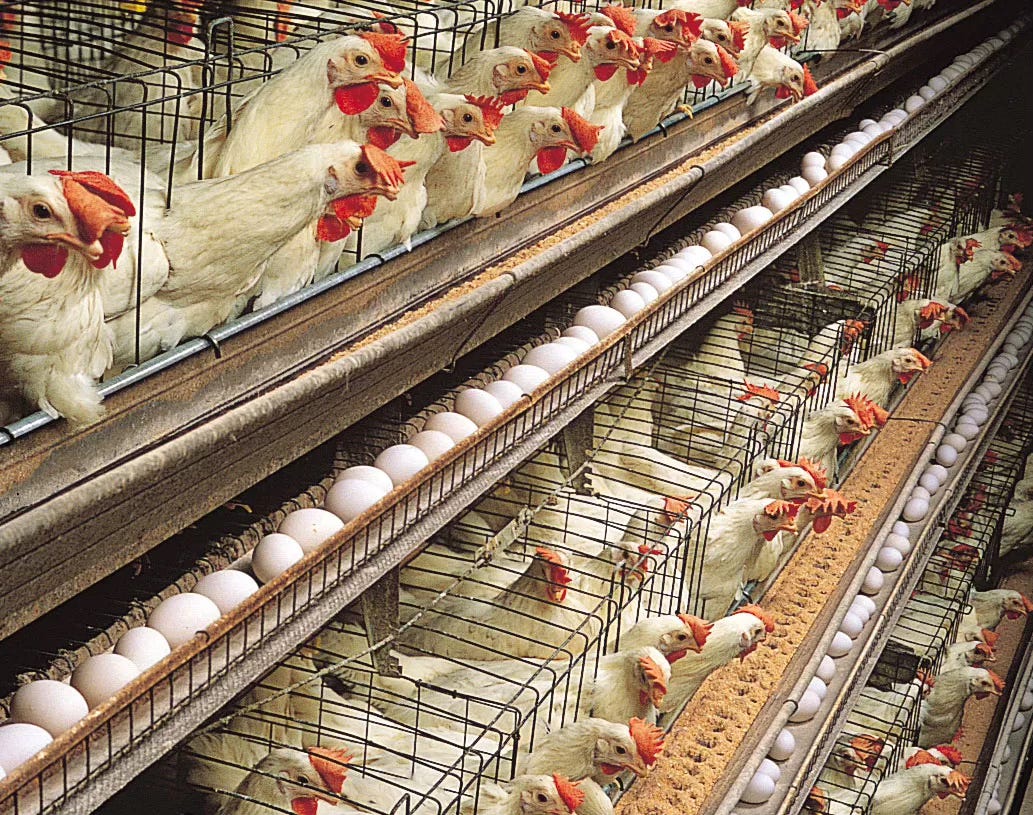
The answer is that both propositions can be investigated without confusing them. A supply shock may raise the competitive price, and competitors may also exploit the moment through an unlawful agreement. Evidence of the latter should be pursued. If executives exchanged assurances, coordinated output, manipulated a benchmark, or agreed on prices, prosecutors should prove the agreement in court and seek meaningful penalties. Nothing in the consumer-welfare standard protects a cartel. Cartels are its easiest case.
But the existence of allegations or evidence concerning a conspiracy does not establish that every increase in egg prices, in every period, was caused by that conspiracy. The government still must identify who agreed to what, when the agreement operated, which sales it affected, and what harm it caused. Bird flu does not immunize collusion, and collusion in one period does not repeal supply and demand in another.
Some readers treated the recent settlement as a confession. It was not. The companies paid money, promised large egg donations, and did not admit wrongdoing. Settlements can reflect litigation risk, expense, uncertainty, or a desire to end a political controversy. They may be sensible, but they are not verdicts. The proper conclusion is not “nothing happened,” nor is it “the accusation proves everything.” It is that allegations should be tested against evidence.
That was precisely my point. If the evidence establishes a cartel, prosecute it. If the evidence establishes a disease-driven shortage, do not call nature a conspiracy. If both occurred, disentangle their effects rather than using one as a slogan to erase the other.
Concentration is a warning sign, but not a conviction

Several readers argued that decades of weak enforcement produced concentrated markets in which large firms can raise prices, suppress wages, and coordinate without leaving a written agreement. This is a serious concern. Concentration can make coordination easier, can increase the payoff from exclusion, and can justify close examination of mergers or conduct. But it remains a starting point for analysis, not its conclusion.
A market may be concentrated because a few firms achieved scale, reduced costs, developed better products, or won the preference of consumers. It may also be concentrated because regulation raises barriers to entry, government grants privileges, or incumbents excluded rivals. Those explanations have different legal and policy implications. Treating the market share itself as the offense avoids the very question antitrust must answer: how was the position obtained and maintained, and what did the firm do with it?
This is why the old slogan remains indispensable: antitrust protects competition, not competitors. A successful firm should not be punished for offering consumers a better bargain. A dominant firm should be punished when it maintains its position through conduct that impairs the competitive process rather than through superior skill, foresight, or industry. That is not indulgence toward monopoly. It is the line that prevents antitrust from becoming a license for government to rearrange markets whenever officials dislike the winners.
Tacit coordination poses a particularly difficult problem. Firms in an oligopoly may observe one another and independently recognize that aggressive price cutting would be unprofitable. Parallel conduct can harm consumers, but parallel conduct alone is not necessarily an agreement. If every gas station can see the price across the street, similar prices do not establish a secret meeting. Stretching “agreement” until it means conscious but independent behavior would expose lawful market responses to criminal liability and give enforcers enormous discretion. The answer is careful merger review, attention to facilitating practices, and proof of actual concerted action—not pretending the evidentiary problem does not exist.
Yes, mergers matter

One thoughtful commenter said that my essay should have discussed mergers, concentration, and monopoly power. That is fair as a description of what was outside the piece, but not as a refutation of what was inside it. A newspaper op-ed about the use of antitrust as an anti-inflation instrument cannot also be a treatise on every branch of antitrust law.
Merger enforcement is important precisely because it can address competitive risks before they become entrenched. Section 7 is predictive. It permits the government to challenge a transaction when the probable effect may be substantially to lessen competition. That is different from proving an agreement under Section 1 or unlawful monopolization under Section 2. A sound antitrust policy uses all three provisions for their intended purposes rather than treating any one of them as a general warrant against bigness.
The consumer-welfare standard does not require passivity toward mergers. It asks whether a transaction is likely to harm consumers through higher prices, reduced output, lower quality, diminished innovation, or other injury to the competitive process. It also requires enforcers to consider efficiencies and market realities. That discipline is a feature, not a loophole. Without it, “concentration” becomes a political adjective and merger review becomes a referendum on whether a company is popular.
Regulation is necessary; indiscriminate regulation is not
Many commenters answered an argument I did not make: that markets need no rules. They invoked the trusts of the Gilded Age, the financial crisis, unsafe workplaces, corporate personhood, and the general proposition that capitalism must be regulated. Of course markets require rules. Property, contract, fraud law, tort law, bankruptcy, securities regulation, environmental law, and antitrust law are part of the institutional structure that makes a market economy possible.
The question is not regulation or anarchy. It is which rule, for which problem, enforced under what standard, at what cost, and subject to what limit. A rule against competitors agreeing on price protects the market. A licensing regime designed by incumbents may suppress it. A safety rule may correct a genuine risk. A price-control threat issued because politicians dislike a lawful market price may discourage investment and prolong scarcity. Saying “regulation” does not resolve the inquiry any more than saying “freedom” does.
Several readers seemed to believe that opposition to progressive antitrust means opposition to all antitrust. That is a convenient caricature because it avoids defending the progressive program on its own terms. The modern progressive project seeks to use antitrust to pursue a sprawling collection of objectives—labor policy, political power, inequality, small-business protection, media diversity, and hostility to bigness—often without a measurable limiting principle. Those may be subjects for legislation. They should not be smuggled into broad statutory language and left to whichever regulator happens to hold office.
The consumer-welfare standard supplies the limit. It directs courts and enforcers toward injury to competition and consumers and away from free-floating judgments about social virtue. It does not answer every case mechanically, but it makes officials show their work. That requirement becomes more important, not less, when both parties are tempted to use enforcement against political enemies.
Profits, “gouging,” and the morality play
Other commenters pointed to record profits as proof that companies used shortages as cover for gouging. High profits can justify curiosity. They may attract entry and reveal where supply is especially valuable. They may also accompany collusion or exclusion. What they do not do, standing alone, is establish either.
Suppose a disease sharply reduces the supply of eggs while demand changes little. The market price rises. Producers whose flocks survive may earn unusually high margins even though they never communicated with a competitor. Those profits are not proof that the shortage was invented. They are also the incentive for producers to expand supply, repopulate flocks, and enter the market. If government treats the temporary return as evidence of guilt, it weakens the mechanism most likely to bring the price back down.
“Corporate greed” explains very little because the desire to earn a profit did not suddenly appear when inflation accelerated. Firms wanted profits before the shortage, during it, and after it. An explanation for a change must identify something that changed. Supply, demand, costs, capacity, entry, regulation, monetary conditions, fiscal policy, or coordination may do that work. Greed is a permanent human characteristic dressed up as a variable.
Nor does this absolve business of moral or legal responsibility. A company that lies, colludes, excludes rivals unlawfully, or buys government favoritism deserves condemnation. But moral indignation cannot tell us which conduct occurred. That requires evidence and analysis—the two things the word “gouging” is often employed to avoid.
Why not investigate everything?
A fair question appeared repeatedly: If a price spike may result from collusion, why object to an investigation? The government should investigate when facts provide a reasonable basis for suspicion. It should not announce that ordinary price movements are presumptively criminal or use investigations as public-relations substitutes for evidence.
Government investigation is not costless. It imposes legal expense, diverts employees, chills decisions, and creates reputational damage before any violation is proven. The state possesses compulsory process and the threat of punishment. Those powers should be used to discover whether a law was broken, not to produce a televised villain for an economic problem officials cannot quickly solve.
There is also a political danger. Once price dissatisfaction is enough to trigger antitrust scrutiny, enforcement becomes selective by design. Why eggs but not coffee? Why beef but not housing? Why one oil company but not another? The answer will tend to be political visibility, not legal principle. A neutral standard protects consumers, businesses, and political opponents alike.
Crony capitalism is not the free market
Some of the best comments argued that business has forfeited credibility by seeking subsidies, tariffs, bailouts, regulatory protection, and favorable treatment while preaching the invisible hand to everyone else. I agree. Being pro-market and being pro-business are not the same thing. Established businesses often dislike competition and are perfectly willing to use government to avoid it.
A corporation that secures a subsidy by political influence, asks regulators to hobble a rival, or purchases a tariff wall is not practicing free-market capitalism. It is practicing crony capitalism. The same is true when an administration rewards friends, pressures disfavored firms, conditions approvals on political accommodation, or uses antitrust threats as leverage. Government favoritism can create or protect market power as effectively as private exclusion.
That is why I have criticized what I call conservative socialism: the growing belief on the right that government should direct investment, manage prices, choose national champions, take special stakes in firms, and subordinate economic liberty to an official vision of “flourishing.” The answer to progressive industrial policy is not Republican industrial policy. The answer to politically directed antitrust is not politically directed antitrust with a different enemies list.
Readers who called Donald Trump a crony capitalist were therefore not rebutting my argument. They were approaching it from another direction. A government that alternately blesses favored consolidations and threatens companies whose prices or politics offend it is not defending competition. It is replacing the rule of law with bargaining power.
Amazon, Meta, Google—and the demand to “break them up”
Several comments declared that Amazon, Meta, Google, media companies, BlackRock, Vanguard, or Berkshire Hathaway should be broken up. The list varied; the verb did not. But breakup is a remedy, not a mood. Before ordering it, government should define the market, establish market power, prove unlawful conduct or an illegal acquisition, demonstrate causation, and show that the remedy will restore competition without destroying efficiencies consumers value.
My essay discussed the FTC’s Meta case because the court found that the government’s market definition ignored TikTok and YouTube while insisting that Meta monopolized “personal social networking.” That is not a trivial technicality. Market definition determines which alternatives count. Excluding obvious competitors can manufacture monopoly power on paper, but it cannot make consumers stop using them.
This does not mean large technology companies are incapable of violating antitrust law. It means their liability cannot be inferred from their names, wealth, political unpopularity, or the identity of a newspaper’s owner. If Amazon excludes rivals unlawfully, prove it. If Google maintains monopoly power through anticompetitive agreements, prove it. If Meta made an unlawful acquisition, prove it under the relevant statute. “Everybody knows” is the beginning of a campaign speech, not the end of a lawsuit.
The inherited-name theory of antitrust
That brings me back to the personal attacks. My father’s critics have spent nearly half a century claiming that the consumer-welfare standard killed antitrust. The claim survives partly because it is easier to repeat than to explain. Federal and state enforcers still challenge cartels, mergers, and monopolization. Private plaintiffs still seek treble damages. Courts still impose injunctions and structural remedies. What changed was that antitrust became more firmly tied to economics, competitive effects, and administrable legal rules.
My father’s central insight was not that monopoly should be celebrated. It was that an antitrust policy without a coherent objective will be captured by competing political demands. One group wants high prices, another low prices; one wants small firms protected, another wants efficient distribution; one wants labor interests favored, another wants local merchants insulated from chain stores. Courts cannot maximize all of these at once. A consumer-welfare orientation gives antitrust a defensible purpose and a limiting principle.
Calling that “fascist,” “communist,” “neoliberal,” or “pro-oligarch” does not answer it. Neither does reciting controversies from my father’s judicial career. If a reader believes concentration should itself be unlawful, say what concentration level, in what market, subject to what defenses, and with what remedy. If consumer welfare should be replaced, identify the objective and explain how a court is to weigh workers, suppliers, competitors, consumers, innovation, political power, and national policy when their interests conflict. The moment one asks operational questions, slogans begin to wilt.
I am proud to defend my father’s antitrust work, but I do not ask anyone to accept an argument because he made it. I ask that it be judged by whether it is correct. I extend the same courtesy to his critics. Some of the commenters did not.
What the comments revealed
The comment section unintentionally illustrated the danger my essay described. Many readers began with a disliked identity—Bork, Bezos, Trump, Vance, corporation—and reasoned backward to guilt. The law must proceed in the other direction. It starts with a defined offense, examines facts, tests causation, and only then reaches a conclusion.
The substantive critics also revealed an important communication problem for defenders of markets. Many Americans hear “free market” and imagine a government that protects corporate incumbents, socializes their losses, grants them subsidies, tolerates their lobbying, and then lectures ordinary people about discipline. They are right to reject that arrangement. Markets deserve defense because they disperse decision-making, reward service to consumers, and constrain both private and public power—not because every large corporation is virtuous.
Antitrust belongs in that defense. Properly applied, it punishes cartels, protects the competitive process, and prevents firms from acquiring or maintaining market power through unlawful means. Improperly applied, it gives officials a roving commission to punish size, direct production, manage prices, and reward political allies. The difference is not whether enforcement is “strong” or “weak.” It is whether enforcement is principled.
So here is my answer to the commenters who made an argument. Investigate credible evidence. Prosecute actual cartels. Challenge mergers likely to harm competition. Attack exclusionary conduct that maintains monopoly power. Examine concentration carefully. Reject subsidies, protectionism, and favoritism whether demanded by corporations or imposed by politicians. But do not confuse a shortage with a conspiracy, a profit with a confession, size with illegality, or indignation with proof.
And to those who offered only “Bork,” “Bezos,” “nepo baby,” or an obituary for the wrong man: thank you for demonstrating how badly antitrust needs rules of evidence.
Ah shucks.