


“This is how state capitalism takes root—not in a single dramatic leap, but through a series of interventions. First, regulators block private adaptation. Then policymakers step in to “repair” the damage they created.”
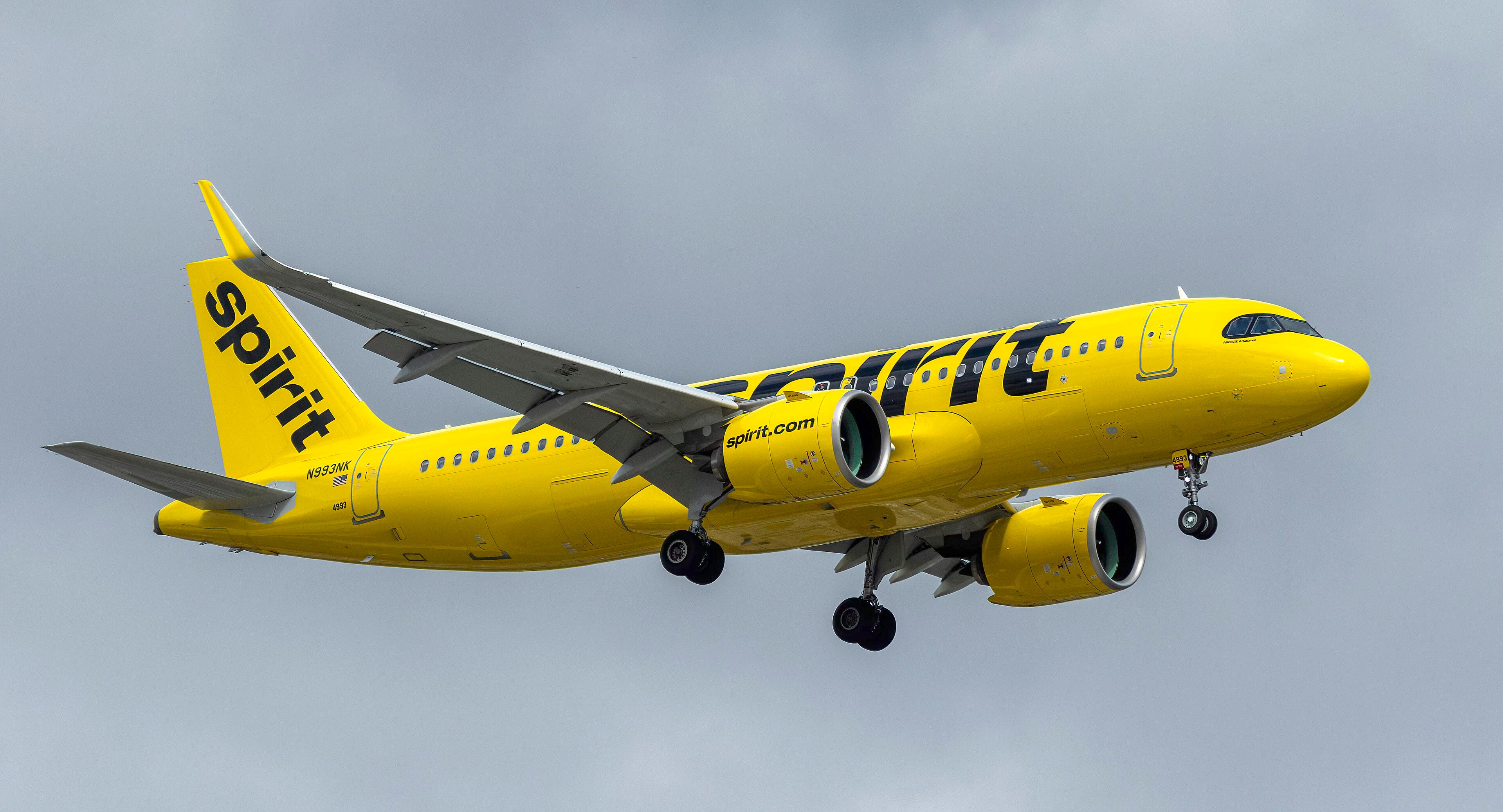
If news reports are correct that the Trump administration plans to rescue Spirit Airlines in return for up to 90% equity in the company, passengers may soon be boarding a carrier that is basically government-owned. Will the renewed airline be decked out with a gold-leaf interior?
Call it a bailout if you like, or dress it up as a “temporary intervention.” A controlling federal stake in a private airline is something new in America. Yet it won’t be the first time political power has merged with private enterprise. If the Spirit Airlines takeover happens (as seems likely), it will only be this administration’s latest adventure in state capitalism.
Across multiple sectors, the Trump administration has mixed public money with private markets in ways that would have once been unthinkable in the U.S. The federal government has taken a minority stake in Intel. It has claimed a “golden share” in U.S. Steel. It has extracted revenue streams from Nvidia and AMD. It has shaped corporate strategy through tariffs, subsidies and regulatory favoritism—rewarding firms that align with political priorities or promise domestic investment.
At times, Washington has behaved less like a regulator and more like a corporate director. President Trump has demanded the removal of executives, including the CEO of Intel and even a Netflix board member. This isn’t neutral governance. It’s political direction of private enterprise.
We got a taste of this during the Obama administration’s ill-fated dalliance with the failed solar-energy company Solyndra. The history of that debacle offers a warning. Solyndra received more than $500 million in federal loans, only to go belly up. Like nations that have subsidized failing and inferior national airlines, the Trump administration will learn that politicized capital allocation distorts markets, misprices risk and often causes beneficiaries to fail. This happens because investment decisions become driven by political calculations rather than by efficiency or consumer demand.
Mr. Trump has moved Washington past setting the rules of the market to steering its outcomes. This is likely to backfire. The same federal government that may soon own Spirit played a decisive role in undermining its last viable path to independent survival.
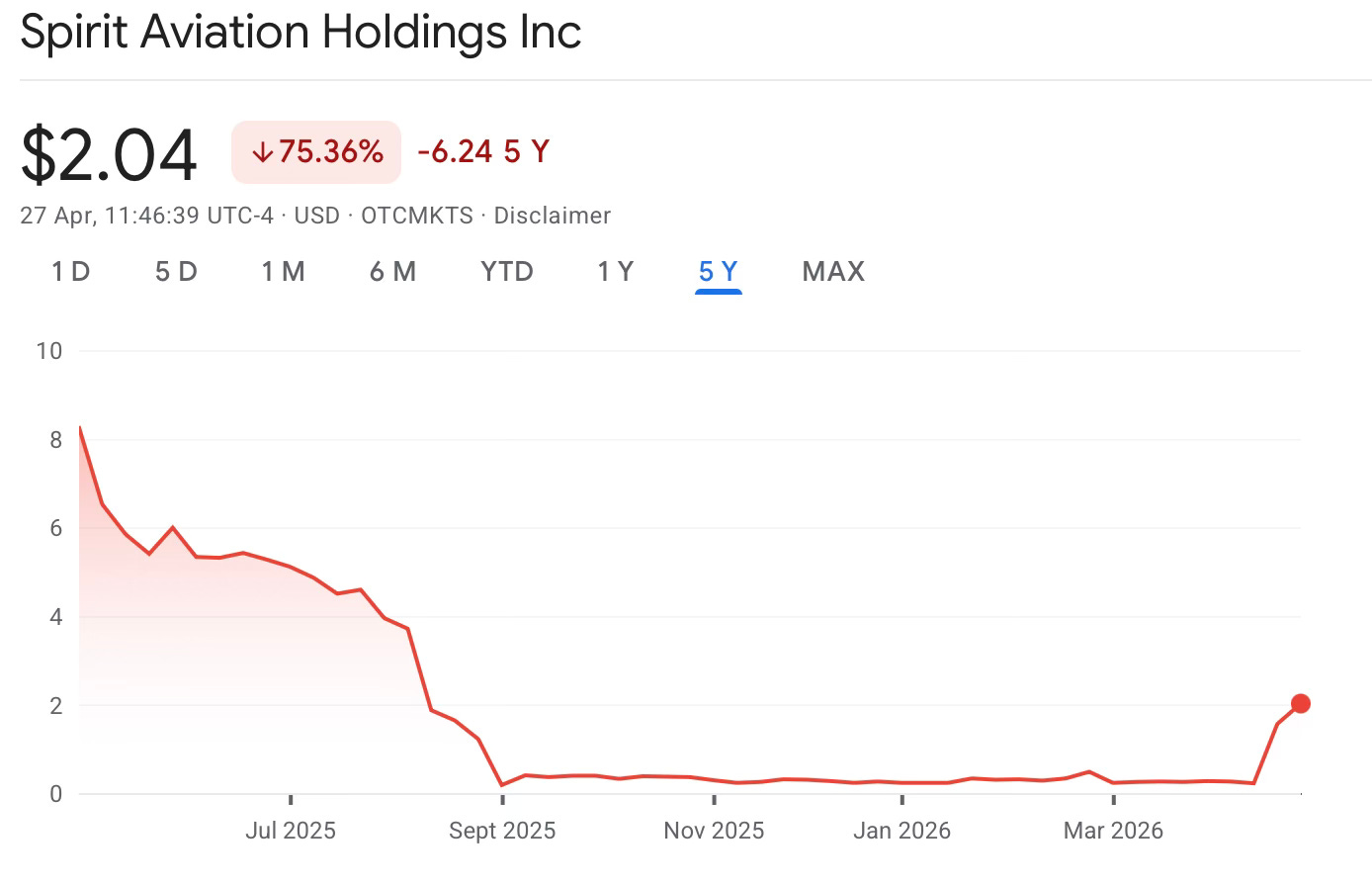
Long before this year’s geopolitical shocks and fuel-price volatility, Spirit was already in decline. Revenue was down. Its stock price, once above $80 a share, collapsed to 47 cents by early 2025. The company filed for Chapter 11 bankruptcy in November 2024.
This downward spiral wasn’t inevitable. Spirit’s decline was accelerated, if not sealed, by the Biden Justice Department’s aggressive antitrust campaign against a proposed $3.8 billion acquisition by JetBlue. That deal would have allowed Spirit to scale, improve service and compete more effectively against the dominant legacy carriers.
Even the presiding judge, William Young, acknowledged the merger’s potential benefits. It would, he noted, bring needed competition to American, Delta, Southwest and United. But he ultimately blocked the deal on the theory that Spirit’s ultralow-cost model exerted downward pressure on fares. “Spirit is a small airline,” Judge Young wrote. “But there are those who love it. To those dedicated customers of Spirit, this one’s for you.”
The airline was denied the opportunity to evolve through a private-sector solution. Denied access to JetBlue’s advantages, Spirit collapsed. Now, the proposed solution is a government takeover.
This is how state capitalism takes root—not in a single dramatic leap, but through a series of interventions. First, regulators block private adaptation. Then policymakers step in to “repair” the damage they created. The result is a system in which government both creates market failures and claims the authority and ability to resolve them.
If the Spirit deal proceeds, the federal government will be validating a new model of political control over private enterprise—one in which Washington decides which companies survive, how they operate, and who pays the price. (Spoiler alert: If you’re a taxpayer, you do.) So buckle up. It’s going to be a bumpy ride.
A version of this article also appeared in The Wall Street Journal.