


Whenever I am feeling down about the state of our political order, I have only to pull up my subscription to Robert Reich’s Substack. There I find a man who embraces hypocrisy not as an embarrassment but as a renewable resource. I am reminded too that however confused our politics may be, there is always someone determined to make them more so.
Reich is reliably outraged. Billionaires are destroying democracy. Giant corporations are rigging the economy. Private equity firms are plundering the American people. Corporate Democrats are betraying the progressive cause. And Donald Trump, naturally, is presiding over the whole sordid enterprise.
His latest dispatch, following the Democrats’ midterm victory, warns that the forces of reaction remain dangerously entrenched. The “billionaire oligarchs” who financed Trump and JD Vance still possess extraordinary wealth and power. Giant corporations still seek monopoly profits at the expense of ordinary Americans. Corporate Democrats still drink from the same financial trough as Republicans.
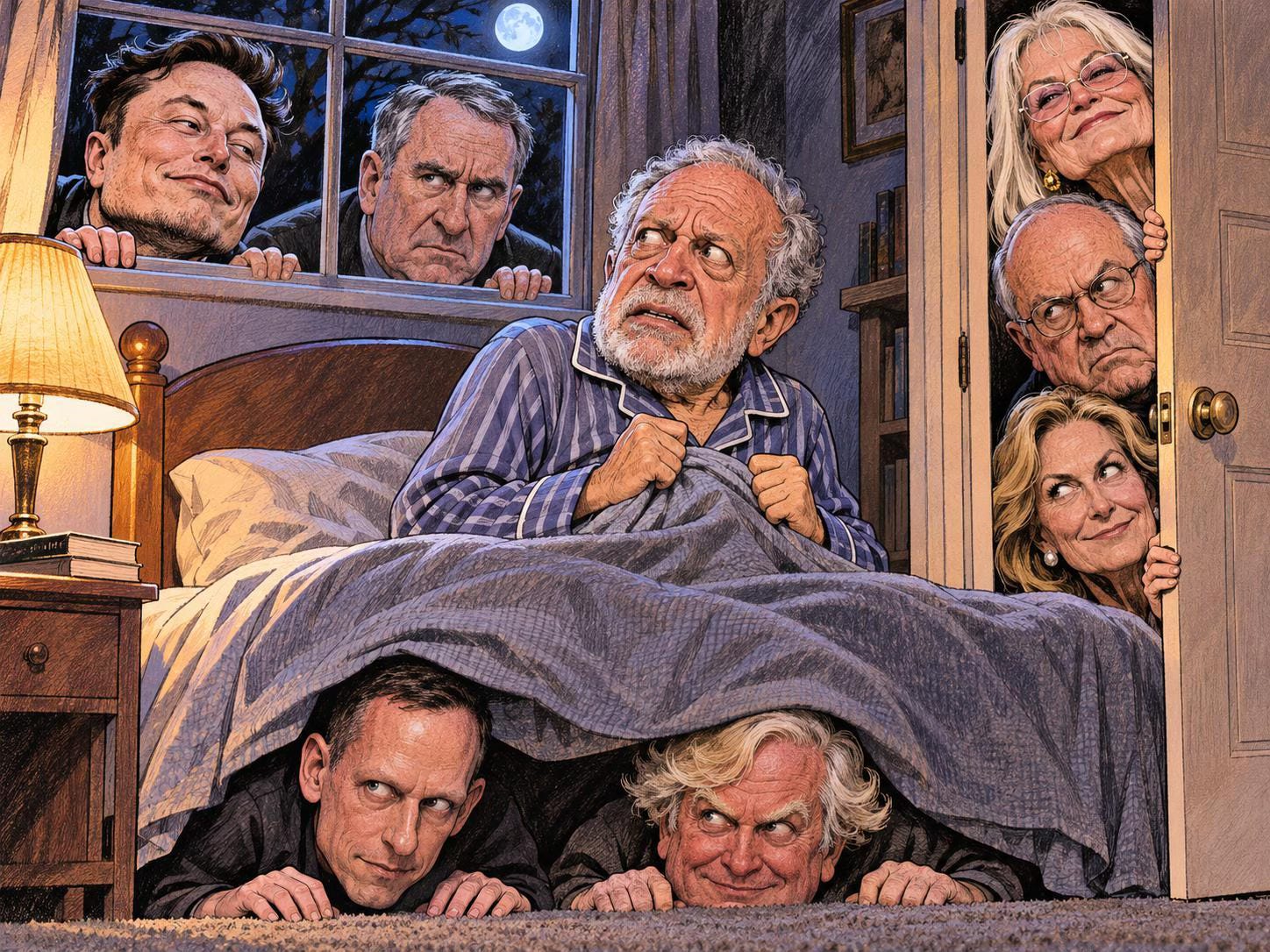
It is a stirring indictment. But reading it, I found myself asking a rather obvious question.
Does any of this apply to the left?
Consider the billionaire oligarchs. Reich has plenty to say about Elon Musk and the wealthy contributors who supported Trump. Fair enough. Money and politics have always made an uncomfortable combination, and an administration that dispenses subsidies, tariffs, regulatory favors, and government contracts provides plenty of opportunities for the wealthy to seek preferential treatment.
But what about the billionaires who bankroll Democrats? Michael Bloomberg? George and Alex Soros? Dustin Moskovitz? Are they oligarchs, too? Or does a billion dollars become less threatening to democracy when its owner supports progressive causes?
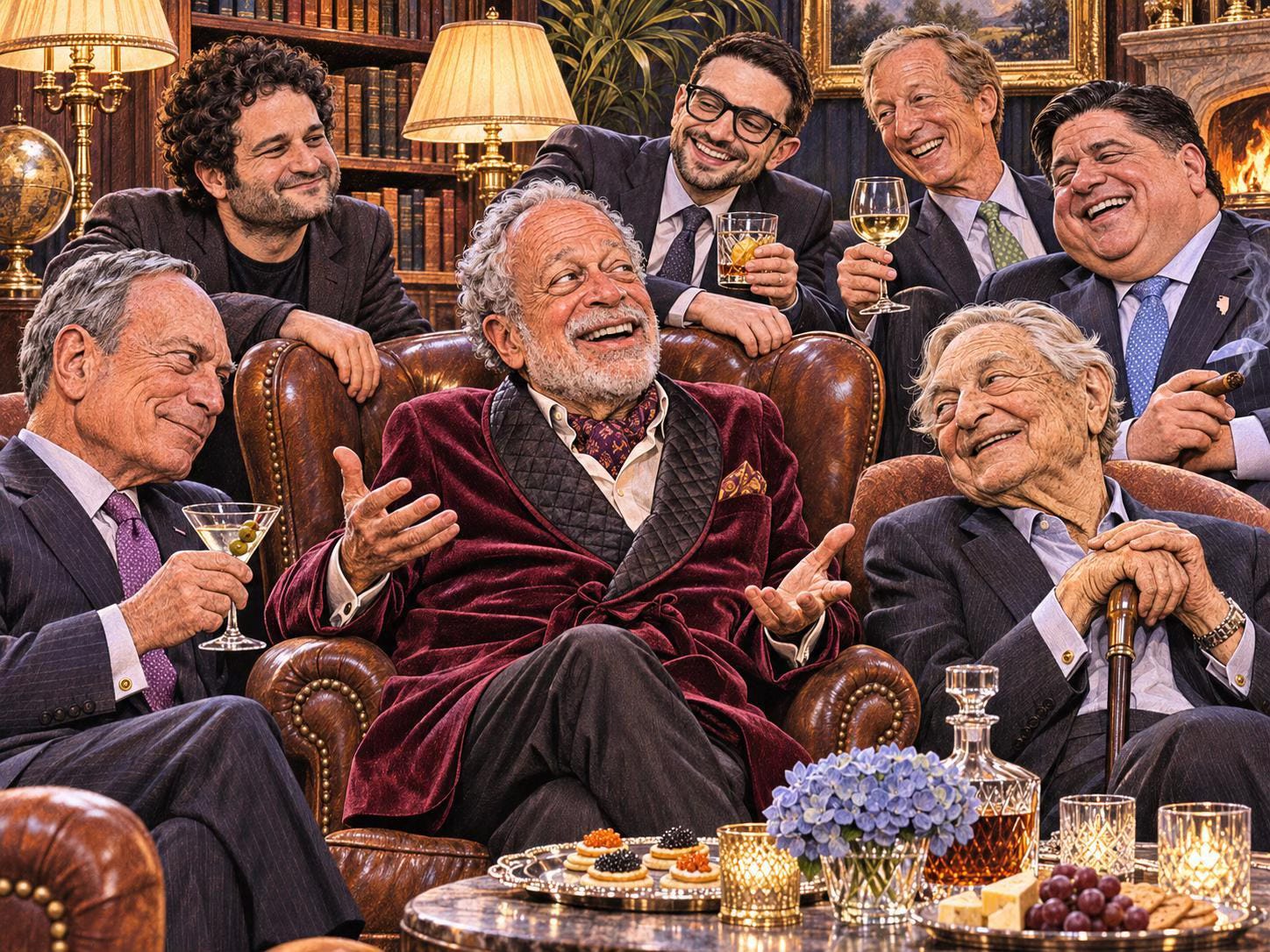
Reich never seems particularly interested in that question.
Perhaps he believes wealthy progressives are motivated by an altruism unavailable to wealthy conservatives. Republican billionaires seek power to enrich themselves, while Democratic billionaires seek power to improve mankind. It is a wonderfully convenient distinction, although one that requires rather more faith in human nature than I am prepared to muster.
Then there are the corporations.
Reich tells us that giant corporations and private equity firms have rigged the economy against ordinary Americans and continue pursuing monopoly profits at their expense. It is an accusation broad enough to encompass almost the entire productive economy and vague enough to avoid having to prove much of anything.
Which corporations? Which markets? What anticompetitive conduct? What evidence of consumer harm?
These are not trivial questions. They are the questions that distinguish economic analysis from political invective.
As we have said many times, the purpose of antitrust law is to protect competition, not to punish successful competitors. A company may become large because it serves consumers better than its rivals. High profits may reflect superior products, lower costs, innovation, or the willingness to take risks others avoided. None of these is an antitrust offense.
Of course, corporations can behave badly. They can collude, exclude competitors, or seek government protection from more efficient rivals. When they do, the law should address the conduct and the resulting harm to competition.
But the presumption that large corporations prosper by exploiting consumers ignores the obvious possibility that consumers made them large by voluntarily purchasing what they sell.
And here, too, I wonder whether Reich applies his suspicions consistently.
What about the corporations whose executives support Democrats, whose political action committees contribute to progressive candidates, and whose lobbyists pursue favorable legislation from Democratic lawmakers? Do they somehow transcend the ordinary corporate desire to make money? Does their political orientation immunize them from the temptation to seek advantages from government?
Reich seems to think that corporate self-interest becomes especially sinister when it intersects with Republican politics. Yet a subsidy is a subsidy, a tariff is a tariff, and a government-created barrier to competition is a barrier regardless of which party arranged it.
His denunciation of “corporate Democrats” is especially revealing. Apparently, even membership in the correct political party offers no protection if one is insufficiently enthusiastic about Reich’s preferred economic agenda. Moderate Democrats who resist more aggressive government intervention are not merely mistaken. They are protecting the status quo because they drink from the same financial trough as Republicans.
Might they instead believe that excessive regulation, confiscatory taxation, or government direction of private investment would damage the economy? That possibility seems not to occur to Reich. Disagreement with his economic prescriptions is routinely transformed into evidence of compromised motives.
There is a deeper paradox in all this.
Reich fears the influence of wealthy interests over government, yet his answer is generally to give government more authority over economic life. More regulation, more taxation, more intervention, more decisions made in Washington about how private wealth should be created, distributed, and used.
But the more economic power government possesses, the more valuable political influence becomes.
If Washington can determine which industries receive subsidies, which companies benefit from tariffs, which technologies receive favorable treatment, and which competitors face regulatory obstacles, businesses and wealthy individuals have enormous incentives to influence those decisions.
Reich sees the wealthy crowding around the government trough and concludes that we need a bigger trough.
One need not defend Trump to recognize the problem. Indeed, Trump’s own enthusiasm for tariffs, industrial policy, and government intervention provides an excellent illustration of the dangers of political favoritism. I have been no admirer of the Republican Party’s growing affection for these policies. Replacing market decisions with political decisions is no more defensible when Republicans do it than when Democrats do.
The principles ought to remain the same regardless of which party controls the machinery of government.
Reich concludes that the struggle between democracy and authoritarianism continues. Perhaps so. Constitutional government is always vulnerable to the ambitions of those who exercise power. But it is worth recalling that democracy does not mean permanent victory for one political faction, and liberty does not mean giving elected officials unlimited authority over the economy.
The Democrats won an important election. Reich is entitled to celebrate. What he cannot reasonably do is treat that victory as proof that his preferred economic program has been vindicated or that everyone who opposes it is an enemy of democracy.
I would take Reich’s warnings about oligarchy more seriously if he applied them consistently. I would take his concern about corporate power more seriously if he distinguished between companies that succeed through competition and those that suppress it. And I would take his defense of democracy more seriously if he recognized that the abuse of power is objectionable regardless of the political affiliation of the person abusing it.
As it stands, his worldview offers a remarkably simple moral framework: wealth is suspicious, except when it finances the right causes; corporations are exploitative, except when they serve the right political purposes; and government power is dangerous, except when entrusted to the right people.
It must be comforting to inhabit a world in which the distinction between virtue and vice can be determined by examining a donor’s political contributions.
So, I intend to keep my subscription. Reich provides a valuable service, although perhaps not the one he intends. Whenever I begin to despair of the state of American political discourse, he reminds me that there is still plenty of room for it to get worse.
And that, paradoxically speaking, is strangely reassuring.