


Robert Reich has spent more than half a century arguing with my father.
The first round took place in an antitrust classroom at Yale Law School in 1971. Reich was a student. My father, Judge Robert Bork, was the professor. Bill Clinton and Hillary Rodham were among the students in the room. Reich recently revisited those debates in both a Substack essay and a YouTube video, blaming my father for what he calls the “monopolization of America” and arguing that Robert Bork bears primary responsibility for the rise of corporate power in modern America.
Reading Reich’s account, I was struck by something remarkable. After fifty-five years, Robert Reich is still arguing against a version of Robert Bork that never actually existed.
According to Reich, my father believed that the only legitimate purpose of antitrust law was to lower prices for consumers, regardless of how large corporations became or how much economic or political power they accumulated. Reich repeats this claim so frequently that it has become an article of faith among progressive antitrust critics. The problem is that it bears little resemblance to what my father actually wrote or what American antitrust law eventually became.
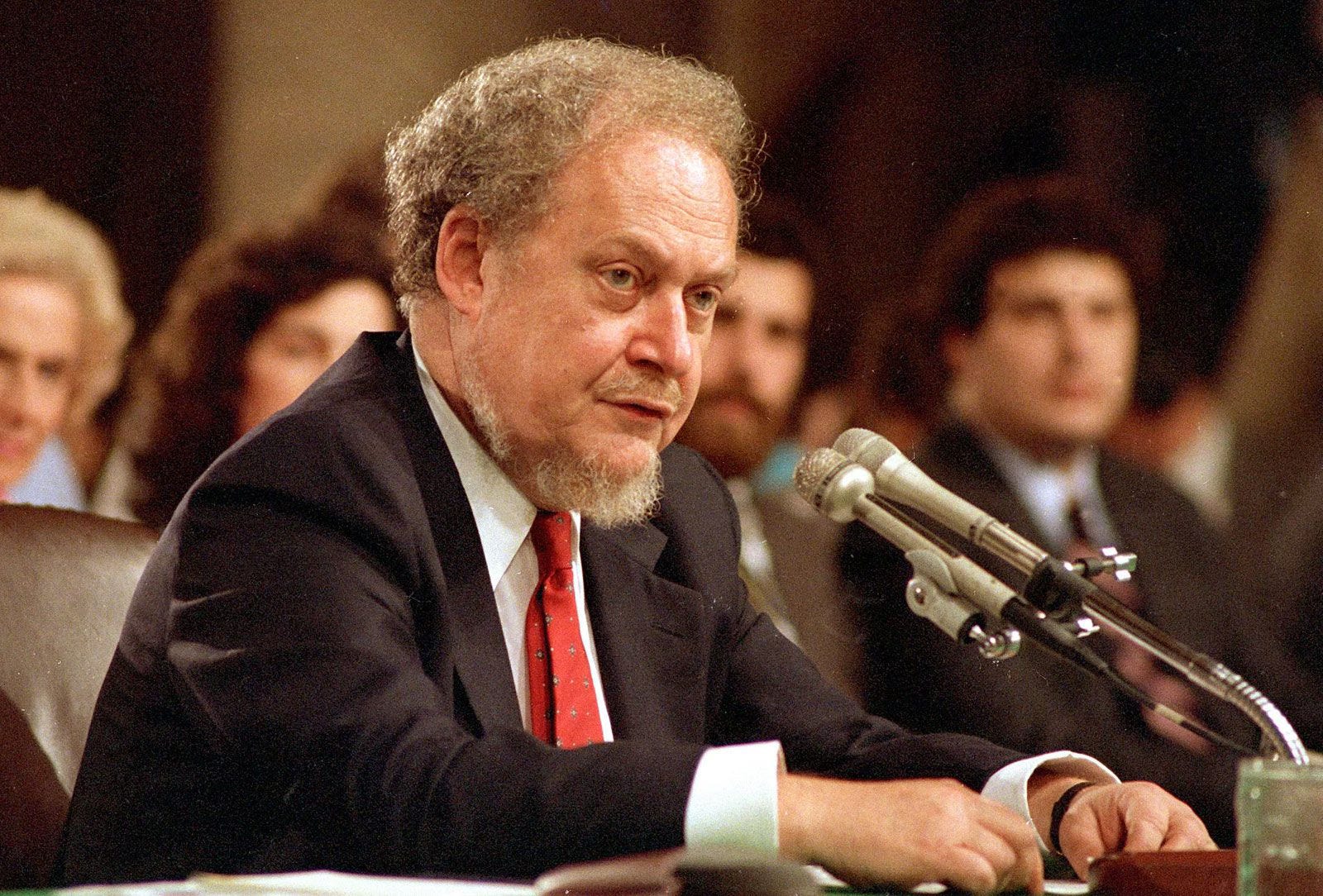
The consumer welfare standard was never simply a price standard. It encompasses output, innovation, quality, efficiency, consumer choice, and long-term consumer welfare alongside prices. Modern antitrust cases involving pharmaceuticals, technology markets, exclusionary conduct, and nascent competition are litigated under the consumer welfare framework even when price effects are not the central issue. The notion that Robert Bork reduced antitrust analysis to the question of whether milk cost a nickel less at the grocery store is not serious intellectual history. It is political folklore.
What my father opposed was something entirely different. He opposed transforming antitrust into an all-purpose political instrument for addressing every social concern associated with large corporations. Reich’s recent writings make clear that this is precisely the transformation he seeks.
In a June Substack post, Reich explicitly argues that corporate concentration should be viewed as problematic “even if it provides economies of scale that might allow lower consumer prices in the short term.” That sentence deserves more attention than it has received because it lays bare the fundamental divide in modern antitrust. Reich is openly acknowledging that consumers may receive lower prices and the economy may benefit from efficiencies, and yet he would still have regulators intervene because he objects to the size, influence, or political implications of the firms involved.
Once that step is taken, antitrust ceases to be competition policy and becomes industrial policy. Regulators are no longer asking whether consumers are harmed but whether they approve of the structure of an industry or the political influence of the companies operating within it. The question shifts from economics to politics, and the answer inevitably depends on who happens to control the government at the time.
Ironically, Reich himself reminds us why my father’s approach proved so influential. Reich recalls challenging my father in class about the political power of large corporations and remembers my father’s response: “How do you expect courts to measure political power?” Reich presents this as a dodge or an evasion. In reality, it was probably the most important antitrust question anyone asked in the second half of the twentieth century.


How exactly should courts measure political power? Should judges examine campaign contributions, lobbying expenditures, media ownership, public relations spending, or the number of meetings executives have with members of Congress? Suppose a merger lowers prices by ten percent, increases output, and produces a better product, but also increases lobbying expenditures in Washington. Should the merger be blocked? If so, where is the formula that tells us when political influence outweighs consumer benefits?
Neither Reich nor the modern neo-Brandeisian movement has ever supplied an answer because no objective answer exists. Once antitrust abandons measurable competitive effects as its organizing principle, it becomes an invitation for regulators to pursue whatever social objectives they find attractive. One administration may use antitrust to promote labor interests. Another may use it to protect small businesses. Another may use it to advance domestic manufacturing or environmental goals. Another may use it to punish politically unpopular firms. The law becomes less a body of legal principles than a collection of policy preferences enforced through litigation.
That was precisely the problem my father confronted in the 1960s and 1970s. Before Robert Bork, antitrust law had become increasingly detached from economics and consumer welfare. Courts blocked mergers because firms were considered too large, condemned aggressive price competition as predatory, and often protected competitors from competition itself. Businesses learned that antitrust law could be used as a weapon against more efficient rivals rather than as a shield for consumers.
My father’s contribution was not to weaken antitrust but to discipline it. He insisted that antitrust law answer a simple question before intervening in markets: where is the harm to consumers? That requirement imposed analytical rigor on an area of law that had become notoriously unpredictable and inconsistent. It also explains why judges and scholars across the ideological spectrum eventually embraced large portions of his framework.
Reich’s current arguments suffer from many of the same weaknesses as his arguments in 1971. He treats concentration as evidence of monopoly and monopoly as evidence of consumer harm. But those are separate propositions requiring separate proof. Firms often become large because they innovate, lower costs, improve products, or create entirely new markets. Consumers were not forced at gunpoint to use Amazon, Google, or Apple. Market success may justify scrutiny, but it is not itself proof of anticompetitive conduct.
Reich also repeats the increasingly fashionable claim that corporate concentration was a major cause of inflation in recent years. Apparently, corporations discovered greed in 2021 after declining to exercise it during the previous four decades. The inflation surge that followed the pandemic occurred across countries with very different levels of concentration and very different competition policies. Fiscal stimulus, monetary expansion, supply chain disruptions, and energy shocks provide a far more convincing explanation than the sudden moral deterioration of corporate America.
Perhaps the greatest irony is that Reich and his allies eventually received exactly the opportunity they had sought for decades. The Biden administration’s antitrust agenda represented the most direct challenge to Robert Bork’s legacy in a generation. Lina Khan and her allies promised to move beyond consumer welfare and use antitrust to address concentration, labor concerns, inequality, and political power.
The courts responded by asking the same question Robert Bork had asked fifty years earlier: where is the evidence of competitive harm? Again and again, regulators offered theories about concentration, size, and influence without demonstrating likely injury to consumers or competition. Again and again, courts rejected those arguments, including courts presided over by judges appointed by Democratic presidents.
Today I serve as President of the Antitrust Education Project and continue to write and speak in defense of the consumer welfare standard, including in my recent book, cowritten with Mark W. Davis, The New Paradox: Antitrust and the Threat of Conservative Socialism. I do so not simply because Robert Bork was my father, although he was, but because the central questions he raised remain unanswered.
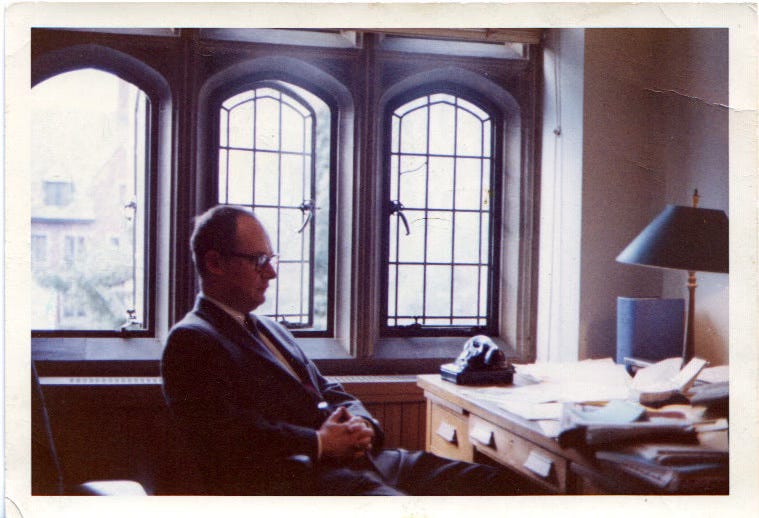
The debate was never about whether corporations possess power. Of course they do. The real question is whether antitrust law should operate according to objective rules designed to protect competition and consumers or whether it should become a vehicle for implementing the political priorities of whichever administration happens to hold power.
Robert Reich has spent fifty-five years criticizing Robert Bork’s answers. What he still has not done is answer Robert Bork’s questions.
Great analysis and rebuttal. But we should always remember that it's easy to know exactly when Robert Reich is saying something wrong, dumb and probably harmful to those who listen to him. How so? His lips are moving.
Reich has so consistently spouted horseshite it is hard for me to believe he himself actually believes all of it. But he likely does. Why? Because he HAS to believe or it is the ostrakon for him.