


I thought I knew my father reasonably well. Apparently, I did not, at least not according to the readers of The Atlantic.
Alex Wagner recently wrote a long article about Robert Bork, originalism, and the beginnings of the Federalist Society. I responded here to what I thought she got wrong. Then I made the mistake of reading the comments, where I encountered a Robert Bork considerably more interesting than the man who raised me: not merely a Yale law professor, solicitor general, federal judge, and unsuccessful Supreme Court nominee, but something closer to the hidden hand of modern American history.
One reader informs us that originalism “was created by the Taney court,” which employed it to produce the Dred Scott decision. Another says Bork and his fellow conservatives sought to build a “Neo-Confederate Constitutional structure.” A third traces the intellectual lineage through the Confederacy, Southern Baptists, Barry Goldwater, the Federalist Society, and Donald Trump. Along the way the discussion touches white supremacy, Christian nationalism, the KKK, and American Nazis.
Dad, it turns out, was busier than I realized.
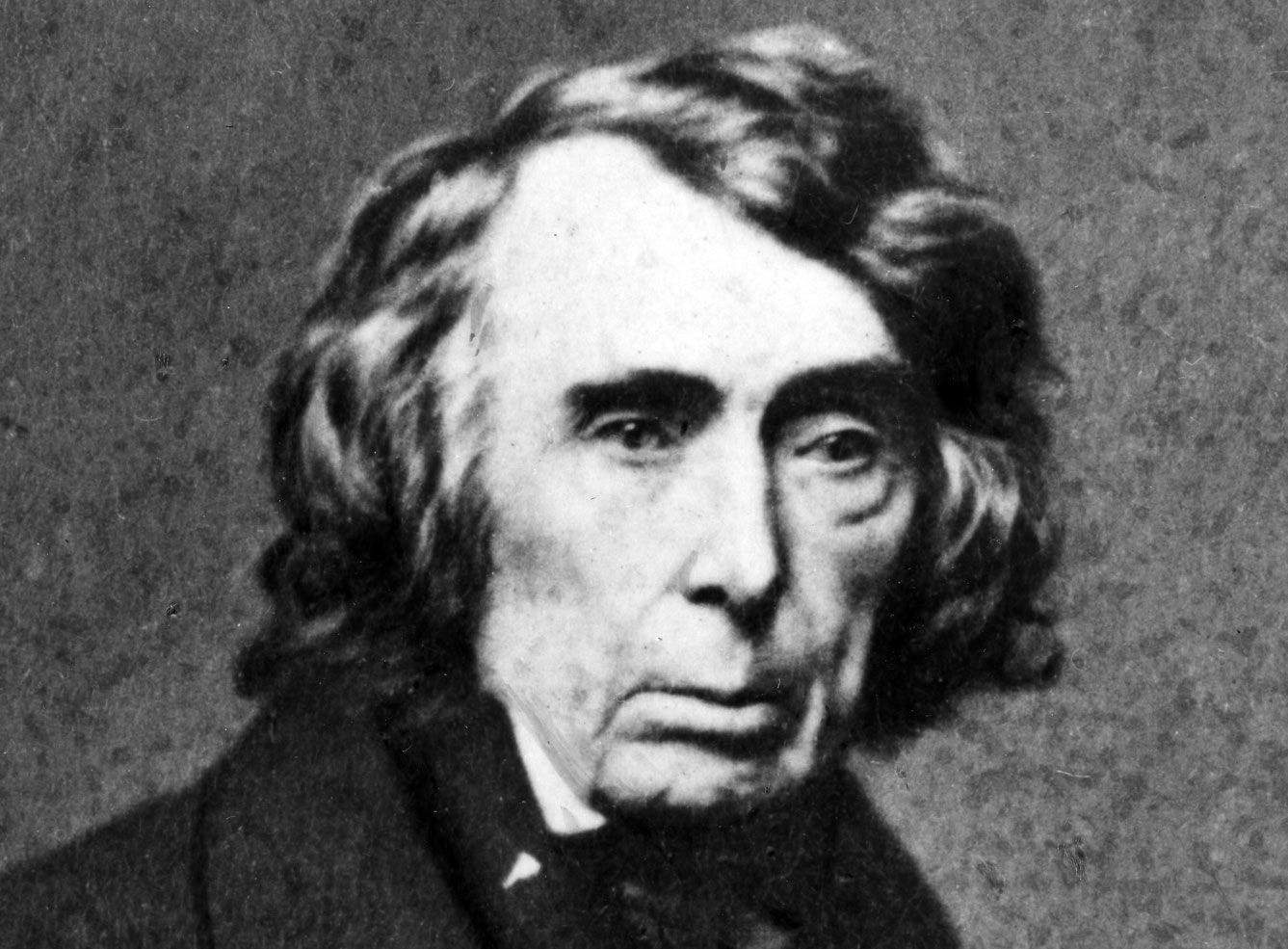
The Dred Scott claim is especially inventive. Chief Justice Roger Taney decided that case in 1857. He did not invent the practice of interpreting the Constitution by reference to its text and historical meaning, and Robert Bork did not inherit some secret jurisprudential baton passed down from Taney. Modern originalism came much later, and it has evolved considerably since my father became one of its most prominent early advocates.
There is a more basic problem with the neo-Confederate theory: the Confederacy lost, and the Constitution changed with it. The Thirteenth Amendment abolished slavery. The Fourteenth established national citizenship and guaranteed due process and equal protection. The Fifteenth prohibited racial discrimination in voting. Originalism requires interpreting those amendments, too. A philosophy that requires recovering the historical meaning of the Fourteenth Amendment is, to put it mildly, an inefficient way to restore the Confederacy.
But there is an actual constitutional argument buried in the comments.
One reader announces that the Federalist Society “was founded for the purpose of excising the Ninth Amendment from the Constitution.” Another calls its members “radical autocrats.” Several invoke the Ninth Amendment itself, which says that enumerating certain rights in the Constitution should not be understood to “deny or disparage others retained by the people.” They believe this exposes a fatal contradiction in Bork’s jurisprudence: if the Constitution recognizes unenumerated rights, how could Bork insist that judges should not invent constitutional rights?
This was not exactly a discovery withheld from Bork.
He was grilled about the Ninth Amendment during his 1987 confirmation battle. His famous “inkblot” analogy became one of the most controversial features of that debate. But his underlying question was considerably harder than the caricature suggests. If a constitutional provision does not tell us which particular unenumerated rights are judicially enforceable, by what method does a judge identify them? And what prevents a judge from constitutionalizing his own moral and political preferences?

Remarkably, one of Wagner’s commenters asks essentially that question: how do we identify Ninth Amendment rights without giving liberal, conservative, or libertarian judges a blank check to impose whichever rights they favor? Another commenter, who volunteers that he was delighted when Bork’s Supreme Court nomination was defeated, nevertheless points out that Bork’s Ninth Amendment position is not the logical contradiction others claim.
Now we are discussing constitutional law.
There are perfectly serious arguments against Bork. Perhaps originalism does not constrain judges as effectively as he believed. Perhaps historical evidence can be ambiguous. Perhaps constitutional provisions embody broad principles whose application changes as circumstances change. Perhaps Bork’s conception of judicial restraint was too restrictive. Originalists themselves have argued about these questions for decades.
None of that requires Robert Bork to have been a Confederate.
My favorite comment comes from a reader who complains that “Bork took the constitution and turned it into a spread sheet. If its not in the spread sheet it doesnt exist.”
Spelling aside, this comes closer to an actual argument than most of what surrounds it. It is also a caricature.
My father did not believe constitutional adjudication consisted simply of searching the document for a particular word. In his 1971 essay “Neutral Principles and Some First Amendment Problems,” he confronted precisely the difficulty of deriving and applying constitutional principles. He recognized both rights specified by text and history and rights derived from the governmental processes established by the Constitution. In discussing Brown v. Board of Education, he acknowledged that the historical record did not provide an answer to every specific modern question. What it did provide, he argued, was a constitutional principle of racial equality that judges were obliged to apply consistently.
His argument was not that everything had to appear in a constitutional spreadsheet. It was that judges needed a principled basis for what they put there.
That brings us to the question that preoccupied him throughout his constitutional writing: when a judge strikes down a law enacted by elected representatives, what makes that exercise of power legitimate?
Bork opened “Neutral Principles” with almost exactly that question. He argued that judicial decisions must be governed by principles that transcend the result in the particular case. Where constitutional text, history, structure, and their fair implications did not support the value a judge wished to enforce, the judge could not simply substitute his own moral preferences and call the result constitutional law.
That proposition can be disputed. It has been disputed for more than half a century. But it is an argument about the legitimate exercise of judicial power in a democracy, not a plan for restoring the Confederacy.
And that is what makes the comments beneath Wagner’s article so revealing. Some of her readers have created a far more exciting Robert Bork: Confederate restorationist, racial theorist, religious reactionary, authoritarian mastermind, and grandfather of Trumpism.
I confess I never met that Robert Bork.
But, then again, neither did they.