



Lina Khan has left Washington, but her campaign to put American business under closer government supervision keeps picking up recruits. The latest appears to be Manhattan District Attorney Alvin Bragg, who announced last week that his office is creating a Corporate Crime and Antitrust Task Force. Prosecuting corporate wrongdoing is only part of the plan. Bragg says his goal is “systemic accountability,” and the announcement promises to “catalyze systemic reform.” That is how a regulator talks about an industry he means to reshape, not how a prosecutor talks about crimes he means to punish.
Khan chaired the Federal Trade Commission under President Biden and became the intellectual leader of the progressive antitrust movement. She advised Mayor Zohran Mamdani after his election and now chairs the board of the city’s Economic Development Corporation. Her ambition to use antitrust law against corporate power did not stay behind in Washington.
There is no public evidence that Khan had anything to do with Bragg’s task force, and she didn’t need to. The philosophy she championed at the FTC holds that antitrust should restrain concentrations of corporate power, rather than concentrate on protecting competition and consumer welfare. That philosophy has influential adherents in New York.
One more prosecutor in a crowded field matters little. What matters is that antitrust law, long disciplined by the consumer welfare standard, is being treated as a license for officials to decide how companies should be organized and how they should behave. A revolt against conventional enforcement that began in federal agencies is spreading to city halls and district attorneys’ offices.
Prosecuting price-fixing, bid-rigging and other real antitrust crimes is entirely proper. That conduct suppresses competition and costs consumers money. But enforcing the rules of a market economy is one job, and supervising that economy is another.
Bragg isn’t claiming new authority. New York’s Donnelly Act lets district attorneys bring criminal antitrust cases, as long as they notify the state attorney general, who can step in and take over. Bragg’s office has used that power before. In 2023 it brought Donnelly Act bid-rigging charges in a Manhattan construction case, and last year Bragg said his office would be the first to use the state’s criminal antitrust law against companies that collude to hold down wages. What’s new is a standing unit whose mandate reaches past individual offenders to the “structures” it says enable crime.
Bragg’s vocabulary tells you something. Prosecutors usually talk about crimes, evidence, defendants and guilt. Bragg talks about systems, structures and reform. A conspiracy can certainly hide behind an elaborate corporate structure, and prosecutors should follow the evidence where it goes. But a corporate structure is not a crime, and wanting to reform an industry is no substitute for proving that someone broke the law. Antitrust depends on keeping those two things apart.
For much of the 20th century, antitrust was confused about its purpose. Courts condemned efficient practices because they hurt smaller rivals, and successful firms were punished for succeeding. Conduct that lowered prices or improved products still drew government hostility.
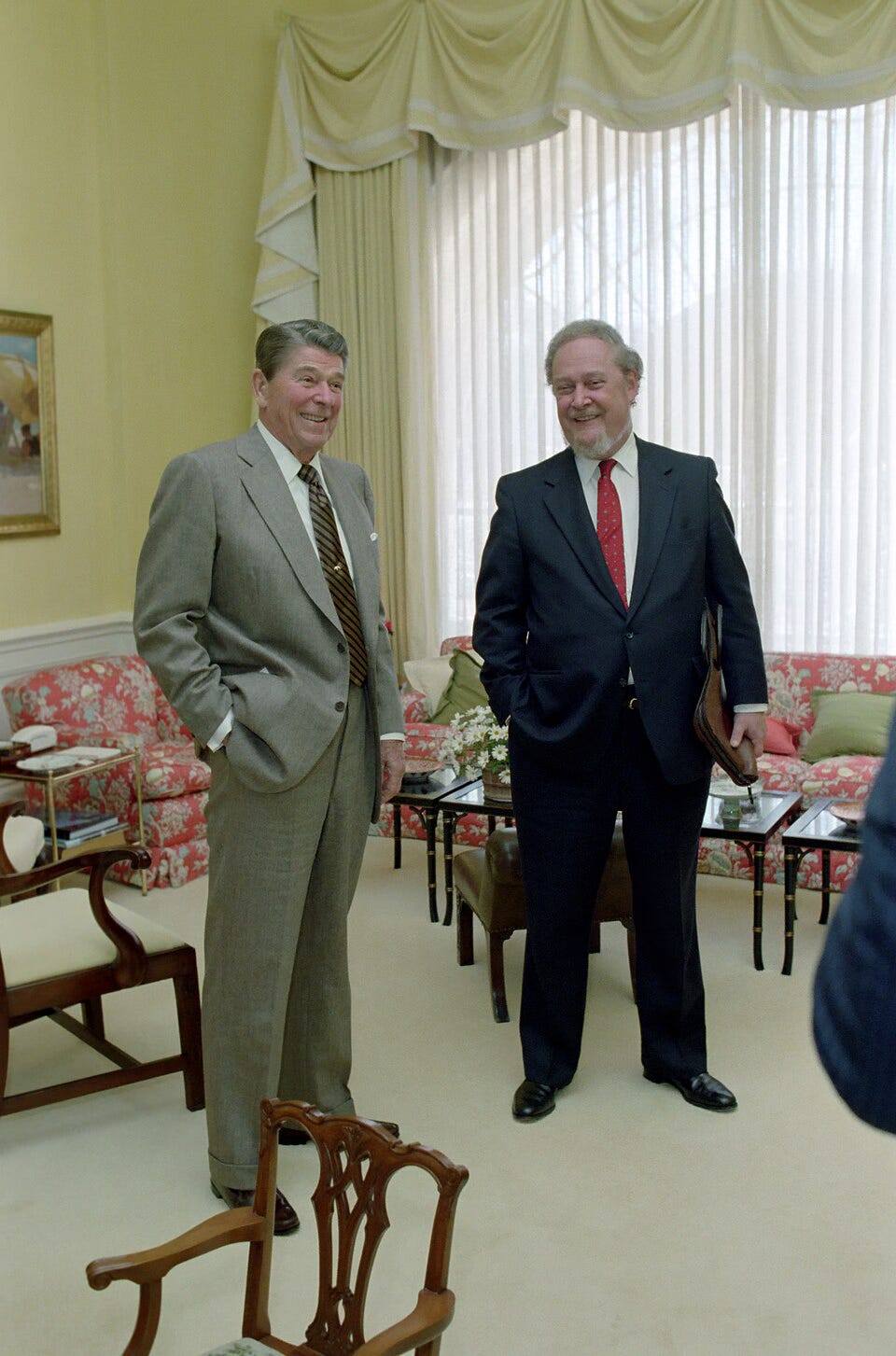
Robert Bork’s The Antitrust Paradox showed how a law meant to protect competition could end up suppressing it. The consumer welfare standard corrected that by directing courts to economic effects rather than a company’s political popularity. Under it, size is not a crime, profit is not proof of misconduct, and competition produces losers as well as winners. Shielding the losers from competition does not protect competition.
Take a retailer that negotiates lower prices from suppliers and passes the savings to customers. Smaller rivals may complain that they can’t match those prices, but the retailer’s success may be exactly the competition antitrust law exists to encourage. A manufacturer that brings distribution in-house cuts out middlemen and lowers its costs. Independent distributors lose business, and consumers come out ahead.
Neither practice is automatically lawful; the economic facts matter. That is the whole point. Enforcement has to tell apart conduct that injures competition from conduct that merely inconveniences competitors or offends a prosecutor’s idea of how an industry ought to run.
Khan helped lead the revolt against that understanding. She and her allies argued that enforcement had narrowed to consumer welfare and grown too tolerant of concentrated power. Under her, the FTC took a broader view of competition policy, paying more attention to market structure, workers, suppliers and the reach of dominant firms.
Her supporters call this an overdue correction after decades of weak enforcement. They argue that economic power can hurt workers, entrepreneurs and consumers in ways a narrow price analysis misses. That is a serious argument, and antitrust law does properly look at more than the price at checkout.
It does not follow that every worry about corporate power belongs in antitrust law. Once competition policy is asked to serve several social goals that may conflict, it becomes hard to separate conduct that harms competition from conduct that merely displeases officials. Businesses also lose any reliable way to know what’s lawful when success itself invites suspicion. The problem gets worse when the philosophy moves from federal agencies into local prosecutors’ offices.
Manhattan raises the stakes. It is home to banks, investment firms and corporate headquarters whose business spans the country and the world, so an investigation there can reach well beyond New York.
A prosecutor doesn’t need to win in court to have influence. Subpoenas are expensive. Investigations hurt reputations, rattle investors and run up legal bills. The threat of criminal charges pushes companies toward a deal, and many will accept limits on perfectly legal conduct to avoid years of litigation. A prosecutor who wants to change corporate behavior can get through a settlement what no court would order after a trial.
The mechanics here are familiar. Government settlements routinely include commitments that go beyond paying a penalty. Those terms can serve a legitimate purpose, especially when they prevent a proven violation from recurring. They can also be used to impose obligations that have little to do with any competitive harm.
Suppose prosecutors are investigating an alleged price-fixing conspiracy at a national company. The right questions are whether an illegal agreement existed, who took part and what harm it caused. Now suppose that, as the price of avoiding indictment, the prosecutor demands changes to the company’s management, its supplier relationships or other lawful operations. At that point the investigation has become a tool for steering corporate governance.
That is a hypothetical, not an accusation against Bragg. His task force has no antitrust record yet. But the breadth of its stated ambitions makes the line worth drawing now, before a contested prosecution or settlement forces the issue.
There is a fair case for local enforcement. Federal prosecutors have limited resources, and local officials may understand local industries better. A bid-rigging scheme on municipal contracts is a natural case for a district attorney. Wage-fixing hurts workers the way price-fixing hurts buyers, and the consumer welfare standard offers no defense of employers who collude on pay.
So the question is not whether local prosecutors should enforce antitrust law at all. It is whether they will stick to prosecuting actual offenses or start using antitrust as a general tool of economic policy.
That matters more as enforcers multiply. A national company could face the Justice Department, the FTC, several state attorneys general and one or more local prosecutors, each working under a different statute and theory and each seeking a different remedy. One objects to pricing, another to distribution, a third to corporate governance, and all of them say they are protecting competition. The company ends up with a patchwork of inconsistent obligations, and its national decisions answer to whichever prosecutor is most aggressive.
New York’s politics point in that direction. Mamdani, a democratic socialist, chose not to appoint a deputy mayor for economic development and created a deputy mayor for economic justice instead. He put the country’s best-known critic of corporate concentration in charge of the board that shapes the city’s development priorities. Meanwhile, the Manhattan district attorney has set up a unit to investigate corporate misconduct and pursue systemic reform.
These are separate offices with separate legal duties. The mayor doesn’t direct the district attorney’s prosecutions, and Khan’s development post gives her no authority over criminal cases. Bragg doesn’t need anyone pulling his strings; he can follow the same script on his own.
In that script, corporate concentration is proof that government must intervene, and business success is a reason for scrutiny. Prosecutors and regulators cast themselves as judges of acceptable economic outcomes, not just as guardians of the rules.
Officials who say they are defending competition may end up restricting it. Unpredictable enforcement gives businesses a reason to avoid aggressive but lawful competitive moves. Large companies can absorb compliance and litigation costs that smaller rivals cannot. Intervention meant to curb corporate power can end up shielding established firms from new competitors.
The temptation to weaponize antitrust is not confined to the left. Populist conservatives have shown their own eagerness to use government power against companies whose speech, politics or cultural influence they dislike. They may disagree with Khan about which companies deserve punishment, but they share the impulse, and either side can turn competition law into a way of settling political scores.
Antitrust law needs an economic foundation because, without one, the government can always find something wrong with a successful company. It is too big, too profitable, too influential, too aggressive or not accommodating enough to rivals. A legal regime that treats those traits as presumptive offenses discourages the entrepreneurship that produces growth.
The consumer welfare standard doesn’t guarantee perfect enforcement, and no standard does. But it makes officials explain how the conduct they challenge harms competition, instead of simply asserting that a company has too much power.
Bragg’s task force may turn out to be a responsible operation that prosecutes real criminal conspiracies and leaves lawful competition alone. If so, it deserves credit. If it sets out to restructure industries according to the political preferences of local officials, it will be another step away from principled antitrust enforcement.
Other district attorneys will be watching. If antitrust investigations bring good headlines, large settlements and leverage over corporate conduct, similar units will appear elsewhere, and an already fragmented antitrust system will fragment further.
Antitrust law exists to preserve the conditions under which businesses compete, not to let prosecutors decide who wins. That matters most when the prosecutor can threaten criminal charges.
Alvin Bragg has every right to prosecute crimes in his jurisdiction. He has no commission to redesign American capitalism. Neither does Lina Khan, the mayor of New York or any other official.
The fifty-state antitrust paradox now has a Manhattan address. Let’s hope it doesn’t become a franchise.