


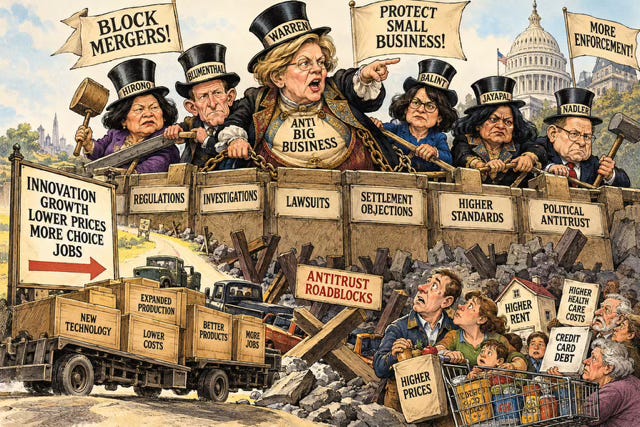
Senator Elizabeth Warren has found a new threat to the American economy: shoe stores getting better deals from their suppliers.
Her new report faults the Federal Trade Commission for letting Dick’s Sporting Goods buy Foot Locker last year without so much as a second request for information. Among her objections is that the combined company can use its size to extract supplier terms that independent shoe shops can’t match.
Put plainly, a bigger retailer might negotiate lower costs, and smaller rivals might have to work harder to keep their customers. Most people would call that competition.
The report, Settling for Less: How Trump’s Weak Antitrust Enforcement and Backroom Deals Are Driving Up Costs, runs 54 pages and was released October 22 along with Senators Mazie Hirono and Richard Blumenthal and Representatives Becca Balint, Pramila Jayapal and Jerry Nadler. It is framed as an indictment of the Trump administration’s enforcement record, and parts of that indictment deserve a hearing. But the report keeps blurring two things antitrust law has long kept apart, protecting competition and protecting competitors. Which one the law serves decides whether it works for consumers or against them.
Adding up the deals
Warren opens with a number: since President Trump returned to office, companies have announced at least 330 large mergers worth more than $2.2 trillion.
The figure says little about competition. A $50 billion acquisition can lower costs and create a serious challenger to a market leader. A $50 million acquisition can eliminate the only rival in a small town. The first may be perfectly lawful and the second may violate Section 7 of the Clayton Act, and the size of the check won’t tell you which. A tally of announcements also says nothing about what happened next. One deal on Warren’s own list, Getty Images and Shutterstock, collapsed after British regulators demanded a divestiture.
Section 7 prohibits acquisitions whose effect may be substantially to lessen competition or tend to create a monopoly. It sets no limit on how large a company may grow. Concentration matters, and merger law properly presumes harm in highly concentrated markets, but that presumption begins an inquiry into entry barriers, efficiencies and likely effects on price and output. It doesn’t replace one. The report too often treats words like “giants” and “behemoths” as though they settled the legal question.
The shoe-store problem
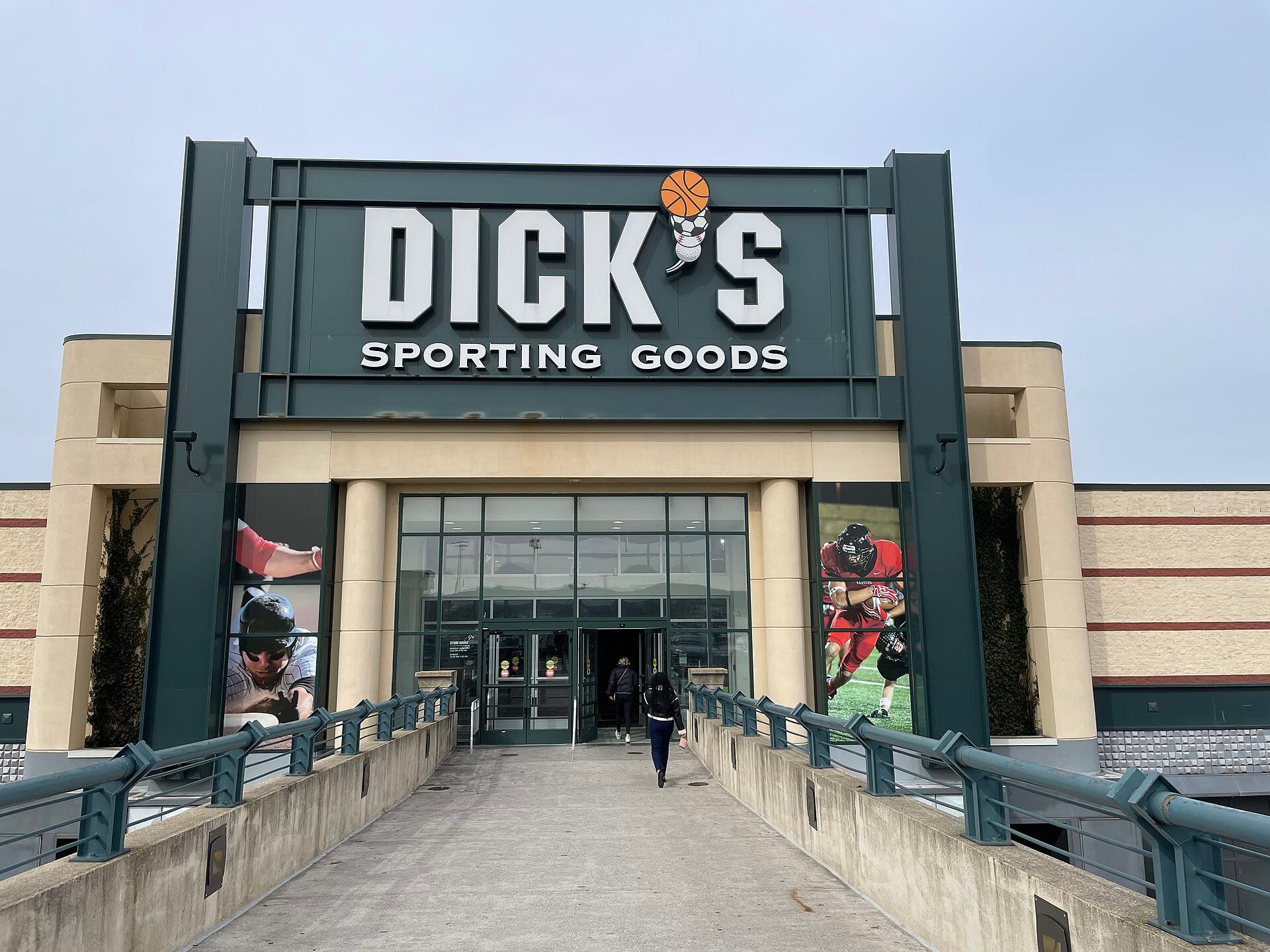
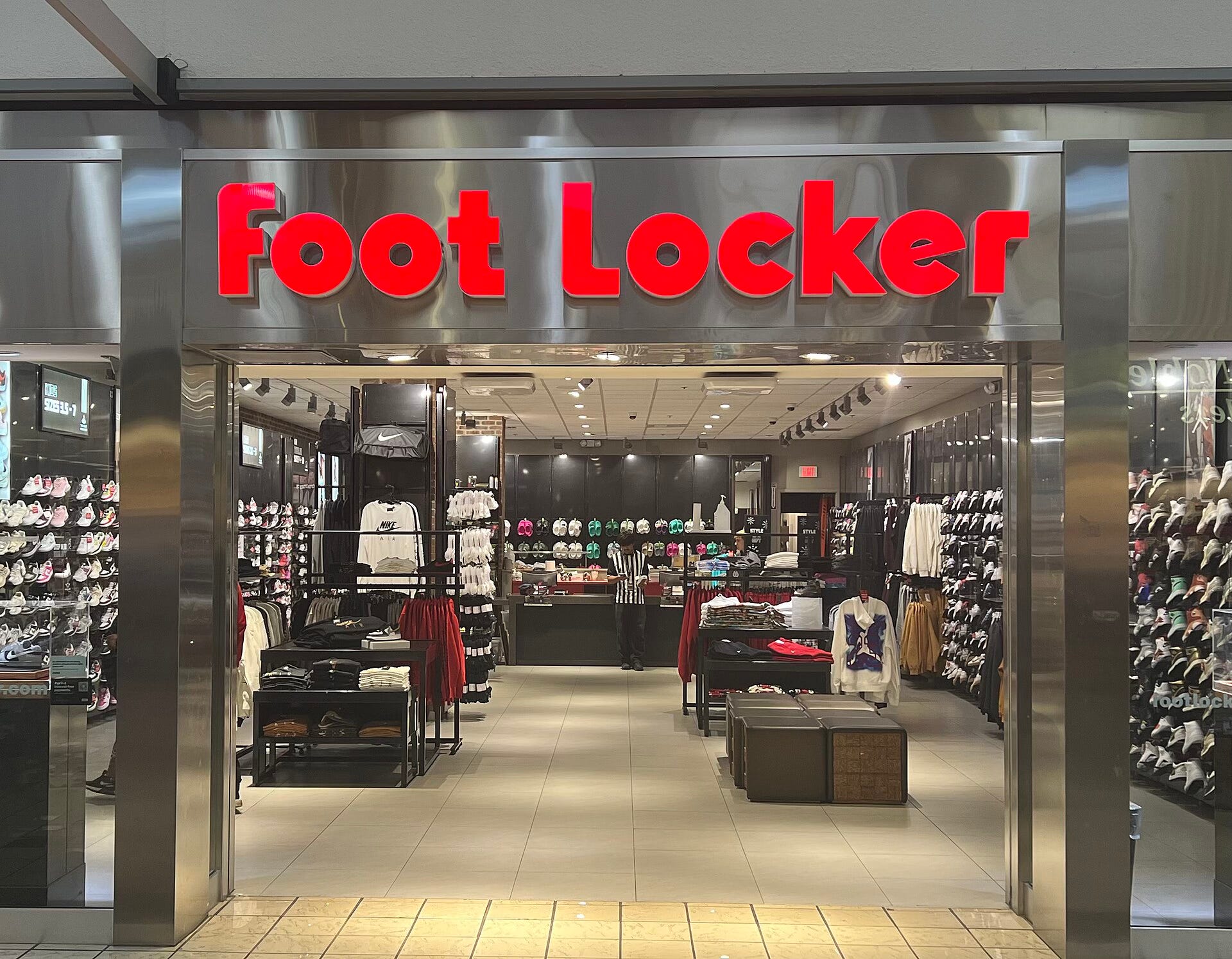
Back to Dick’s and Foot Locker. The report argues that the deal ended head-to-head competition between longtime rivals, gave the combined firm about 15 percent of the U.S. sporting goods market and may have left a near-duopoly in athletic-shoe retail with JD Sports. Those are fair questions, and regulators could have looked harder at them before clearing the deal.
The supplier-terms complaint is a different matter. Large retailers win discounts because they buy in volume, lower a manufacturer’s distribution costs and offer access to millions of customers. Some of those savings reach shoppers. More often than not, that is the reward for running an efficient business.
Buyer power can harm competition. In an August 2025 letter to the FTC and the Justice Department, Warren warned that the merged company might pressure suppliers not to deal with independent stores, and exclusionary conduct of that kind would be a genuine antitrust problem. It is also a separate claim from the observation that independents will struggle to match a larger rival’s costs, and the report runs the two together. If the government blocked deals because they let a retailer negotiate lower wholesale prices, the beneficiaries would be the smaller stores, not the people buying shoes.
A Sneaker Protection Agency may be next.
Pepsi, Walmart and the price of a discount
In January 2025, days before the inauguration, the FTC sued PepsiCo under the Robinson-Patman Act, alleging that it gave Walmart pricing advantages, promotional payments and rebates it denied to competing retailers. The two Republican commissioners dissented from the filing. By May, with Republicans in control, the commission voted to dismiss the case. Warren cites the dismissal as a surrender to corporate power.
The first question is whether Walmart’s discounts helped shoppers. If Pepsi charges Walmart less, Walmart can sell Pepsi for less. That doesn’t decide the legal issue, since the Robinson-Patman Act has its own prohibitions and defenses and not every discount reflects real cost savings. But a smaller grocer paying more is not, by itself, proof that consumers were hurt.
The complaint did contain a more serious allegation, which the report highlights: internal emails suggesting Pepsi tracked the gap between Walmart’s prices and everyone else’s in order to keep Walmart ahead. If Pepsi was working to keep rival stores’ shelf prices high, shoppers at those stores were harmed, and that is the part of the case worth arguing about. Whether the evidence would have proved it is what litigation would have tested. Much of the report’s case, though, rests on the injury to independent grocers and convenience stores, and their interests are not the same as their customers’. A retailer would like its rivals to pay as much for merchandise as it does. Its customers would like the opposite.
The law is not a participation trophy
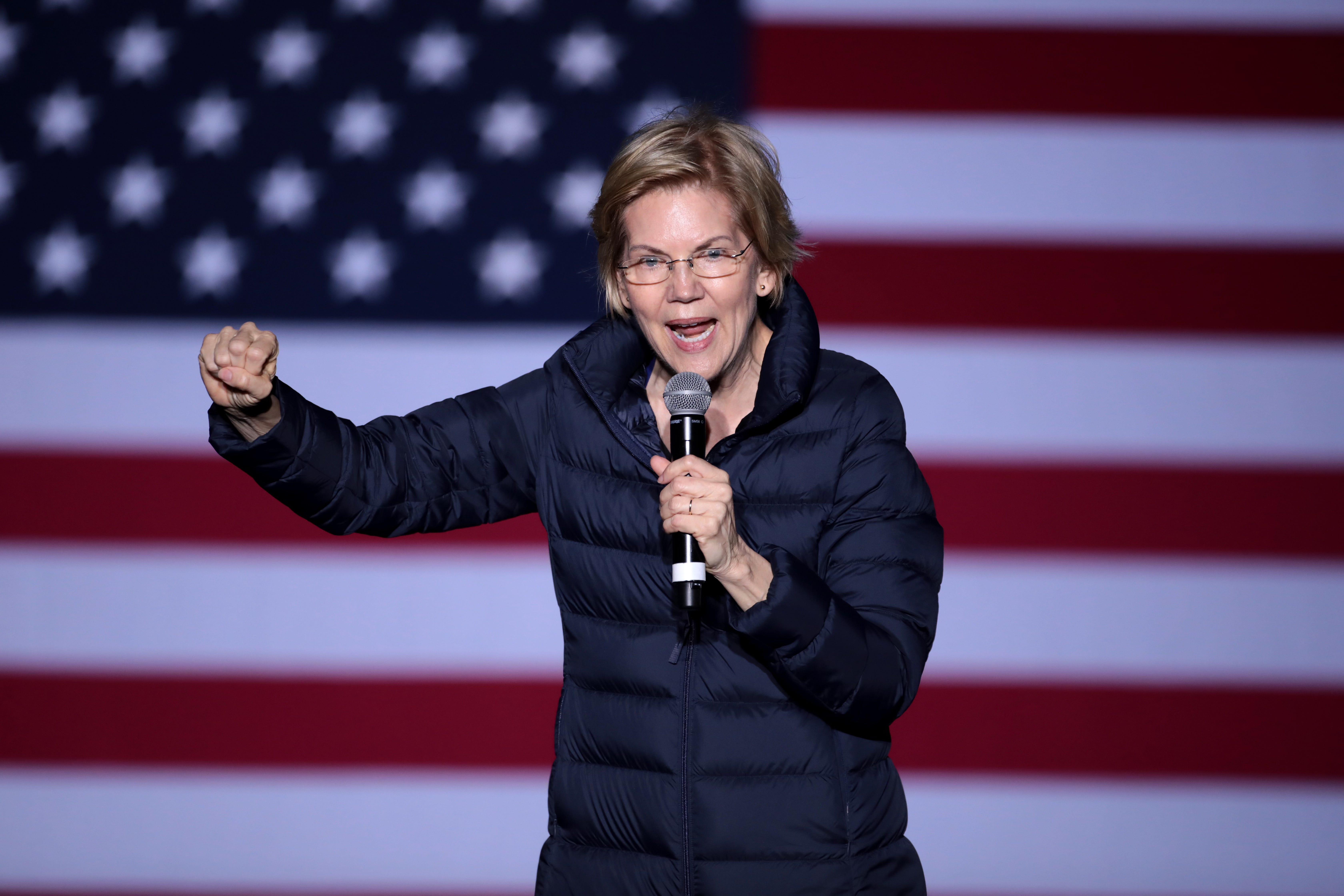
The distinction Warren keeps losing is not an invention of Chicago School economists. In Brown Shoe Co. v. United States (1962), the Supreme Court said Congress was concerned with protecting competition rather than competitors, even as it applied the more interventionist merger analysis of that era.
Brunswick Corp. v. Pueblo Bowl-O-Mat (1977) makes the point more sharply. Brunswick, a bowling-equipment maker that was also the country’s largest operator of bowling centers, took over alleys that had defaulted on their equipment payments. Rival operators sued for the profits they would have earned had those alleys closed. In effect they wanted damages for being denied the benefit of less competition. A unanimous Court turned them away: the injury antitrust law remedies must flow from what makes the conduct anticompetitive, and losses from continued competition don’t qualify.
Competitors have no legal claim to customers, profits or protection from rivals that perform better. Competition produces winners and losers, and sometimes the winner is a large company. A business that loses customers to a more efficient rival has not necessarily suffered an antitrust violation. It may simply be losing.
Blaming antitrust for the cost of living
The report’s broadest claim concerns household budgets. It cites an estimated $1,430 monthly grocery bill for a family of four, record rents, health insurance costs up more than 25 percent from 2025 to 2026 and $1.28 trillion in credit card debt, the record the New York Fed reported at the end of 2025. (Balances stood at $1.26 trillion in the second quarter of this year.)
Some of the report’s individual cases come with specific evidence of harm. The Live Nation jury found a $1.72-per-ticket overcharge, for instance. The household statistics are another matter, because the report never connects them to the mergers and settlements it condemns. Food prices move with harvests, energy, transportation and labor. Housing costs reflect construction expenses, interest rates and zoning. Insurance premiums follow medical costs, regulation and subsidies. Anticompetitive conduct can raise prices, which is why enforcement matters, but high prices do not show that a particular merger caused them. Credit card balances, meanwhile, measure how much people borrow, not what credit costs or how competitive card markets are.
Applied consistently, this method could pin almost any price increase on weak enforcement. It also ignores the costs of its own prescription. Mergers that produce economies of scale can lower production and distribution costs, and vertical integration can eliminate duplicated expenses and improve coordination. Those gains aren’t guaranteed, and neither are the harms the report assumes. That is why mergers should be analyzed rather than counted.
Settlements and breakups
Warren also objects to settlements that fall short of the remedies the government first sought. Her strongest example is Live Nation and Ticketmaster. The Justice Department sued in 2024 to break the companies up, then settled one week into trial in March 2026. Live Nation kept Ticketmaster and agreed to cap service fees at 15 percent, open venues to rival ticketing services, give up booking agreements at 13 amphitheaters and set aside $280 million for state claims.
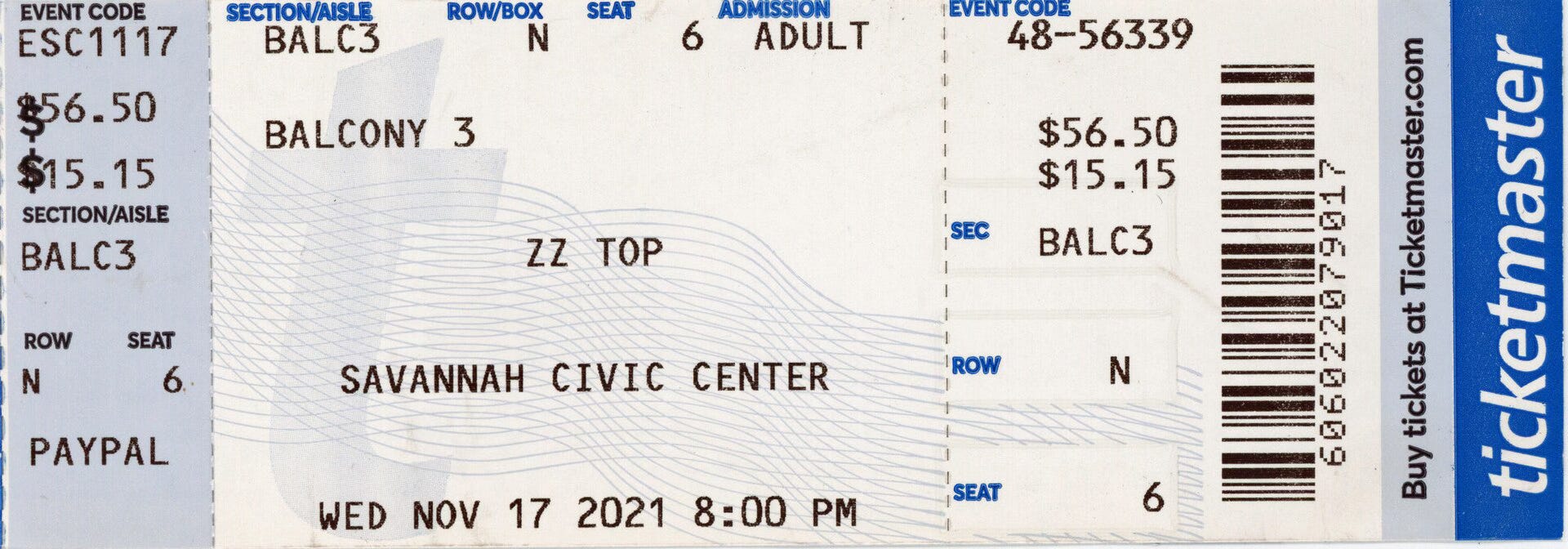
That settlement deserves hard scrutiny. Thirty-three states and the District of Columbia rejected it, kept litigating and in April won a jury verdict that Live Nation had illegally monopolized ticketing and overcharged fans in 22 states. The report also cites reporting that President Trump personally told a senior Justice Department official to settle. A remedy that leaves proven exclusionary conduct in place is inadequate, whatever its origins.
The absence of a breakup, however, doesn’t by itself show that a settlement fails to protect competition. Remedies exist to prevent or correct competitive harm, not to punish an unpopular company. Divestitures, changes to contract terms or access requirements can sometimes restore competition as effectively as a breakup. The relevant questions are whether a remedy works, whether it can be enforced and whether it preserves legitimate efficiencies. Measuring enforcement by the severity of the government’s demands makes as much sense as judging a surgeon by the number of amputations.
Warren’s case against political antitrust
The report’s most serious charge is that Trump-connected lobbyists and donors have shaped enforcement decisions. If officials pressured prosecutors to reward allies or protect donors, that is an abuse of power, and it should be investigated. How antitrust law treats a company should have nothing to do with whether its executives gave to a president’s campaign, hired his friends or bought tickets to his fundraisers.
Yet Warren’s position contains a contradiction. She objects to politicians bending antitrust toward political ends while championing a version of antitrust that would hand officials far more discretion over how the economy is organized. She has called for banning mergers involving very large companies outright, and the approach she favors would have regulators ask whether firms have grown too big, too profitable, too influential or too tough on smaller rivals. Standards that elastic invite favoritism. The more power the government has to approve, block or restructure businesses according to subjective goals, the more valuable political access becomes.
The consumer welfare standard won’t stop every abuse. It does tie enforcement to identifiable competitive harm, economic evidence and settled law, and that constrains the people wielding it. The alternative leaves officials to decide which businesses deserve to succeed. I would prefer less discretion and more law.
When big becomes bad
If size itself becomes the objection, a company might hesitate to buy a struggling rival because the combined business would be larger and therefore more suspect. A retailer might think twice before negotiating lower wholesale prices. Mergers that would cut costs, widen distribution or help a firm take on an entrenched leader might never happen. Founders would find it harder to sell to a larger company, one of the main ways they realize the value of what they’ve built. And established firms might find fewer rivals growing large enough to threaten them, so a policy sold as hostile to big business could end up protecting some of it.
Consumers would pay through lower efficiency, higher prices, fewer choices and slower innovation. That won’t happen in every case. Some mergers do threaten competition and should be stopped, some vertical arrangements do shut out rivals and some dominant firms do maintain monopolies unlawfully. Telling those cases apart from ordinary competition takes careful legal and economic analysis, which is exactly the step a big-is-bad philosophy skips.
The consumer is not a special interest
The consumer welfare standard became central to antitrust because the law’s early goals pulled against one another: protect small business, prevent concentration, preserve local merchants, restrain big corporations and encourage competition, though not so much that less efficient firms disappear. The standard brought coherence by asking about competitive effects rather than about which businesses were involved or how sympathetic they seemed.
It does not require indifference to market power. It requires that market power be shown rather than presumed. It counts innovation, quality and output along with price. And it gives large companies no license to do as they please, since conduct that unlawfully excludes rivals remains subject to enforcement. What it rejects is sacrificing competition to preserve particular competitors.
The purpose of competition is to force businesses to serve their customers. The process can be harsh. It rewards ingenuity, efficiency and risk-taking, punishes complacency and has toppled companies that once looked invincible. Senator Warren wants to protect Americans from big business. Her approach would more likely protect businesses from competition, and consumers would pay for it.