



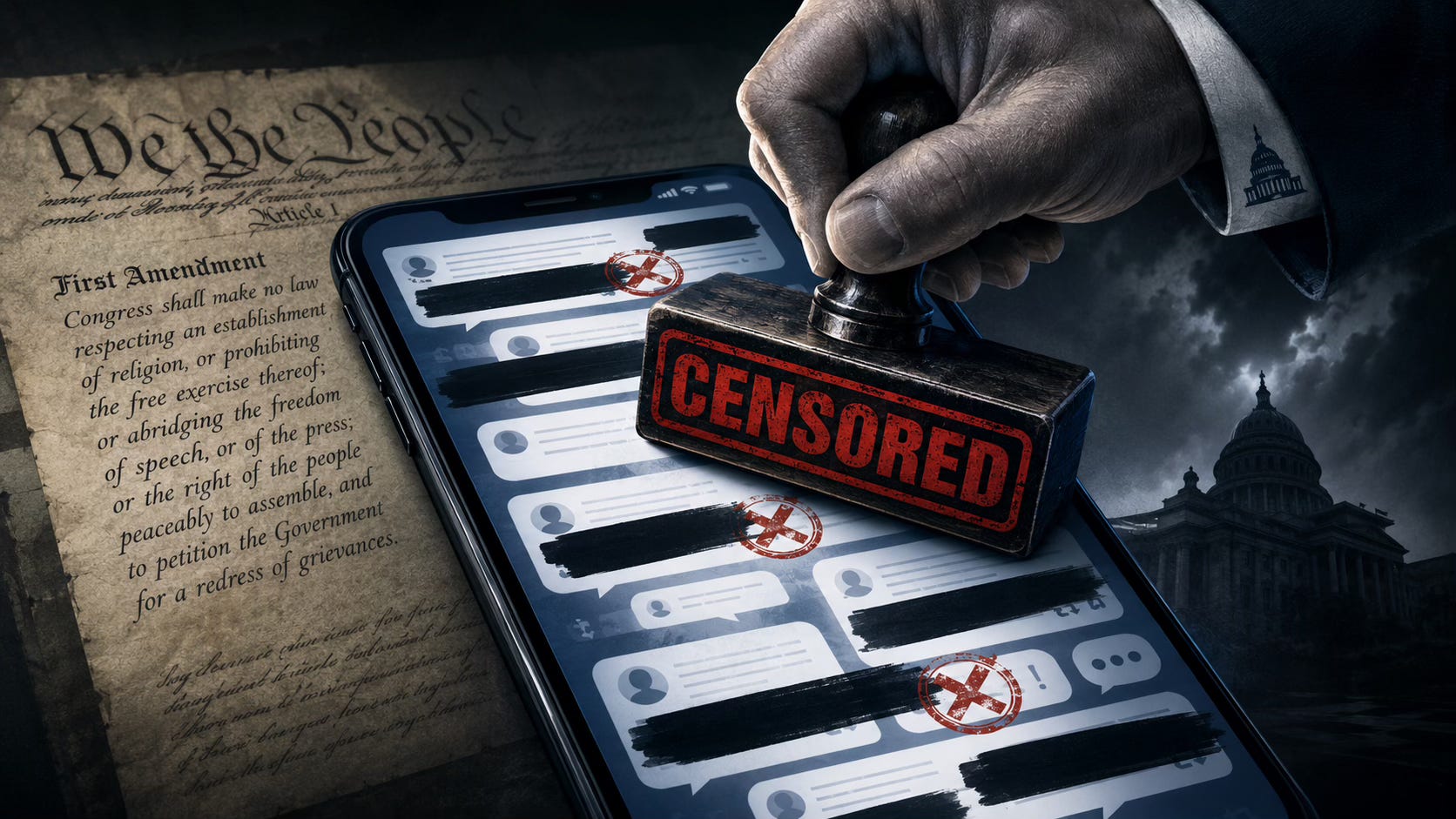
Please enjoy Chapter 7 of our new book!
“Information wants to be free, but we must be mindful of the potential consequences of its unrestricted circulation.”
Tim Wu
“Liberating tolerance, then, would mean intolerance against movements from the Right and toleration of the movements from the Left.”
Herbert Marcuse
“Khanservatives” understandably want to use antitrust to hurt large social media companies as payback for years of being deposted, deplatformed, and silenced on social media. Conservatives are also smarting over the way they were snidely denigrated by elites, and their values demonized by trend-setting media and corporations. C-suite executives warped their corporate cultures to enforce far-left ESG and DEI mandates, while cancel culture enforcers stood at the wings to remove dissenters from the national debate.
When conservatives made forceful accusations that they were being censored online, they were ridiculed for sounding like General Jack D. Ripper in Strangelove, wringing their hands about fluoridation and our precious bodily fluids. “It’s even in little children’s ice cream!” Conservatives were told that social media platforms have an obligation to remove content that could be considered an echo of hostile foreign disinformation, or misinformation, or hate speech. But social media remains a robust forum for all views, we were told.
Now we know that we conservatives were perhaps not paranoid enough.
Thanks to journalist Matt Taibbi, we now know that the pre-Elon Musk Twitter had contacts with as many as 80 FBI and Department of Homeland Security agents on a special social media task force to flag accounts for deletion. Many accounts, including parody accounts, were removed. On Facebook and other social media sites, teams of “fact checkers” removed posts or shadow banned them. But what was unseen by conservatives was how hard the government twisted the arms of social media companies.
“I mean basically these people from the Biden Administration would call up our team and like scream at them and curse,” Mark Zuckerberg told Joe Rogan shortly after Donald Trump’s election. He said that the government told him to remove a parody post about Leonardo DiCaprio watching a TV ad ten years in the future saying that if you took the COVID-19 vaccines, ‘you might be eligible for compensation.’ “You have to take that down,” a government agent told Zuckerberg, who responded: “We’re not going take down humor and satire. We’re not going to take down things that are true.”
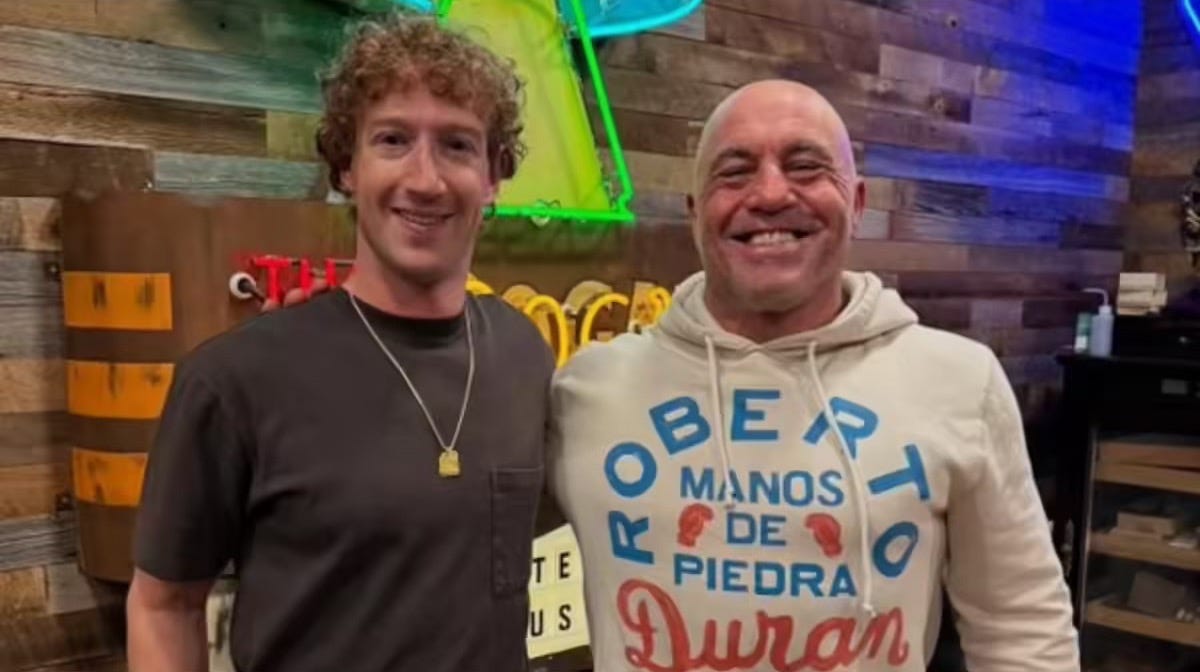
But media companies often did take down things that were true, or at least arguable. They did it because they are highly regulated businesses, the reason why Shari Redstone agreed to pay $16 million to settle a frivolous lawsuit. When a powerful agency or the White House itself told a social media company to take down a post, such “jawboning” was not taken as a suggestion. Meta learned this the hard way, resisting continuous demands to remove content. In 2021, President Biden held a press conference to accuse social media companies of “killing people” with misinformation. It is in this context—the progressive desire to control speech—that the Biden-era antitrust actions, now being continued by the Trump Administration, should be seen. “All these different agencies and branches of government basically just started investigating, coming after our company,” Zuckerberg said. “And it was brutal.”
Antitrust, one of the most powerful weapons of government can wield against business, was always lurking in the background like Al Capone and his baseball bat when jawboning and censorship were in play.
Federal agencies across the alphabet were deployed to control speech. Consider how the now-defunct Global Engagement Center of the U.S. State Department used its $61 million budget and 120 employees to censor Americans on social media. Federal agencies ranging from the FBI to the CIA, Department of Homeland Security and the Pentagon provided “guidance” for Twitter, Facebook, and Google on who to depost and what content to remove. It was thanks to these efforts that what the CIA and FBI today acknowledge is the likeliest origin for the COVID virus—a lab leak in Wuhan, China—was deemed a dangerous conspiracy theory that had to be suppressed. The GEC also made direct grants to the London-based Global Disinformation Index, which distributed blacklists to corporations about websites deemed to be chocked full of “disinformation” and therefore risky to an advertiser’s reputation. These exclusion lists targeted The American Spectator, Newsmax, The Federalist, The American Conservative, The Daily Wire, and The New York Post. The blacklist also included that notorious, error-riddled, utterly biased rag known as Reason magazine, which in truth is just about the most conscientious, well-informed, painstakingly honest publication you could possibly find.
The worst aspect of this censorship was that it was performed in total secrecy. There’s a dark joke about brain surgeons—if a scalpel slips, a surgeon says, “Oops, there goes the violin lessons!” In a similar way, secret task forces were eliminating thoughts and pulling ideas from the national brain. That alone ought to put to rest any doubt that there is, in fact, a deep state.
How the Left Migrated from the Constitution to Censorship
The Biden years saw the full emergence of an open leftwing ideological war on the First Amendment. This is little more than ironic. Conservatives once criticized liberals as being too extreme in defense of free speech, whether the speech was that of the Klu Klux Klan, D.H. Lawrence’s Lady Chatterley’s Lover, or the dirty-word humor of Lenny Bruce. The American Civil Liberties Union, supported and run by many prominent liberal Jewish lawyers of distinction, went so far as to defend the speech rights of American Nazis. Agree or disagree with that stance, (and I respectfully disagree), there was something noble about Americans who valued the First Amendment so much that they would support the rights of people to advocate an ideology that called for their extermination.
Nadine Strossen, the former president of the ACLU, once said: “Freedom has its risks. Suppression of freedom, I believe, is a surer prescription for disaster”—began to be marginalized by progressives, as if the First Amendment were nothing but an antiquated legacy from the era of wigs and carriages. The takeover accelerated in 2018 when Alexandria Ocasio-Cortez took off her bartender’s apron and leapt over the bar to defeat Rep. Joe Crowley, a Brooklyn Democrat who was in the House leadership and often considered a future speaker. The rise of AOC signaled the far-left takeover by the explicitly socialist Bernie Sanders wing of the party, outliers like Zohran Mamdani who took center stage by ousting or cowing the traditional liberals in the Democratic Party clinging to their old-fashioned free-speech beliefs.
With this takeover came an attempt to degrade the First Amendment. An exemplar of the new left is Mary Anne Franks, former Rhodes Scholar and law professor at George Washington University, who wrote a celebrated book entitled Fearless Speech: Breaking Free from the First Amendment.
“Can we finally say and admit to ourselves that the First Amendment is not this noble principle?” Franks said in a TechPolicy interview promoting her book. Franks described the First Amendment as mostly “a tool” to “crush the people who are trying to advocate for equality, and it’s going to be used to protect the people who are trying to preserve the status quo.” Franks would replace the First Amendment with a system that makes a distinction between “reckless speech” that endangers vulnerable groups and “fearless speech” that seeks to advance equality and democracy. Franks has proposed rewriting the First Amendment to remove the Freedom of the Press clause. And what does Mary Anne Franks teach? Civil rights law.
She is not an outlier, but the natural result of an illiberal strain of the left that can be traced back to the writings of Herbert Marcuse. This 20th century neo-Marxist, neo-Freudian philosopher made an argument in his essay, “Repressive Tolerance,” that that the “Left has no equal voice, no equal access to the mass media and their public facilities—not because a conspiracy excludes it, but because, in good old capitalist fashion, it does not have the required purchasing power.” If it was ever true, this assertion has not aged well in the era of MSNBC, CNN, The New York Times and other mainstream media.

Anticipating Franks, Marcuse mourned that “the stupid opinion is treated with the same respect as the intelligent one, the misinformed may talk as long as the informed, and propaganda rides along with education, truth with falsehood. The pure toleration of sense and nonsense is justified by the democratic argument that nobody, neither group nor individual, is in possession of the truth and capable of defining what is right and wrong, good and bad …” Marcuse then went on to assert that “liberating tolerance, then, would mean intolerance against movements from the Right and toleration of the movements from the Left.”
To believe that such censorship is a good idea would require one to discard any knowledge of how the French and Bolshevik revolutions unfolded. If such a system of coerced speech were ever implemented, history strongly suggests that movements of the Left would soon turn against each other, with the censors censoring those who were not leftwing enough, or the wrong kind of left, who deserve to become “deviationists” without speech rights. Given that laws are ultimately enforced by power, such a scheme could only result in mass persecution and ultimately bloodshed. Then there is the idiocy of entrusting self-selected experts to decide “what is right and wrong, good and bad.” The Founders of this country understood that no one can be trusted with such power. Conservatives, above all, should be wary of any scheme to manage speech—including through their own misuse of antitrust law.
A more sophisticated critique of the First Amendment comes from Tim Wu, who coordinated progressive antitrust policies across federal agencies for President Biden. He wrote a New York Times essay, “the First Amendment is spinning out of control.”
Wu objects to the Supreme Court opinion in United States v. Alvarez that the First Amendment protects “even outright lies.” Jacob Sullum of Reason (that magazine our government secretly warned advertisers is too dangerous to do business with) wrote: “As Wu sees it, freedom of speech should hinge on the ‘value’ of the ideas that people express. It is hard to imagine a broader license for government censorship.”
Censorship came not only from social media companies, but from the provision of corporate services. One day in 2022, Sam Brownback a former U.S. senator, governor of Kansas and ambassador went to a Chase Bank to make a deposit for the nonprofit organization he headed, the National Committee for Religious Freedom. Brownback was told that his account had been cancelled. He had fallen into Chase’s “reputational risk” category. Now President Trump has directed OPM to remove subjective political categories like reputational risk as an excuse for debanking.
The obvious high-school civics class objection to Franks and Wu is who gets to decide what is “reckless speech” and what is “fearless speech”? Who parses which ideas have enough “value” to be expressed? To be fair, Wu grapples with the toxic tendency of social media to drive polarization. Society and people across the ideological spectrum are feeling the effects of algorithm’s tendency toward the divisive, the negative, and the untrue. But an extreme solution—government regulation of speech—guarantees to be a cure worse than the disease, as Strossen warned.
Intellectuals of all stripes once appreciated this. Yet such anti-free-speech views are not just being advanced by policy intellectuals. They are being pushed from the political top, down. Former U.S. Senator, Secretary of State and almost-president John Kerry told audience members at the World Economic Forum that in regard to disinformation “our First Amendment stands as a major block to the ability to be able to hammer it out of existence.”
The government agencies supporting and fomenting secret blacklisting of conservative speech were not freelancing. They had the support of President Biden, Vice President Harris and other leaders of the Democratic Party. One key to their dominance of the national debate for years was to control social media. And they did this by keeping social media companies, as Mark Zuckerberg explained to Joe Rogan, in the constant thrall of government. A key weapon in the hands of government was antitrust enforcement as the means to intimidate social media companies into fulfilling its secret orders to remove content.
The reports on censorship from Jim Jordan, Chairman of the House Judiciary Committee, his colleagues and staff make for scintillating reading. The committee documented the elaborate workings of the government censorship machine. They also exposed the political abuse of neutral antitrust law, based on the neutral Consumer Welfare Standard. You would think that this should be the last thing any conservative would want to resurrect. The path from being a victim of censorship to being a censor has its roots in this victimization.
“That a corporation can’t compel anything at the point of a gun is cold comfort when it can cut you off from commerce, speech, and even your bank account,” FTC Commissioner Mark Meador has said. “Human flourishing can be crushed by much less than a standing army. Likewise, economic transactions with a monopolist—or dominant competitors acting in concert—are anything but voluntary; by definition there is no meaningful alternative, and the terms imposed can be coercive.”
Meador makes a powerful statement that encapsulates the justifiable rage of conservatives over their mistreatment during the Biden era. But there are several things wrong about that statement as well. First, it is vastly overstated. Debanking and deposting, though outrageous and un-American, did not begin to stem the tide of conservative criticism of the progressive left. The last four years were hardly a hellscape for conservative content, much of which I happily followed on Facebook and pre-Musk Twitter. Second, corporations acted under pressure from the Biden Administration and its many agents. When that pressure ended with the election of Donald Trump, so did those policies. Third, reinstituting conservative content moderation by the disingenuous use of antitrust and other official powers only ensures that what were anomalies in American history become institutionalized practices that will be used against conservatives by the next progressive administration.
Is Conservative Censorship Better?
Early in his tenure, FTC Chairman Andrew Ferguson sent out a notice that his agency was seeking public comment on “technology platform censorship.” This sounds, at first, like a commendable examination of the problem of the last administration’s censorship and bias in Silicon Valley. In the hands of the FTC and its bureaucracy, however, examination of this problem threatens to become the problem itself.
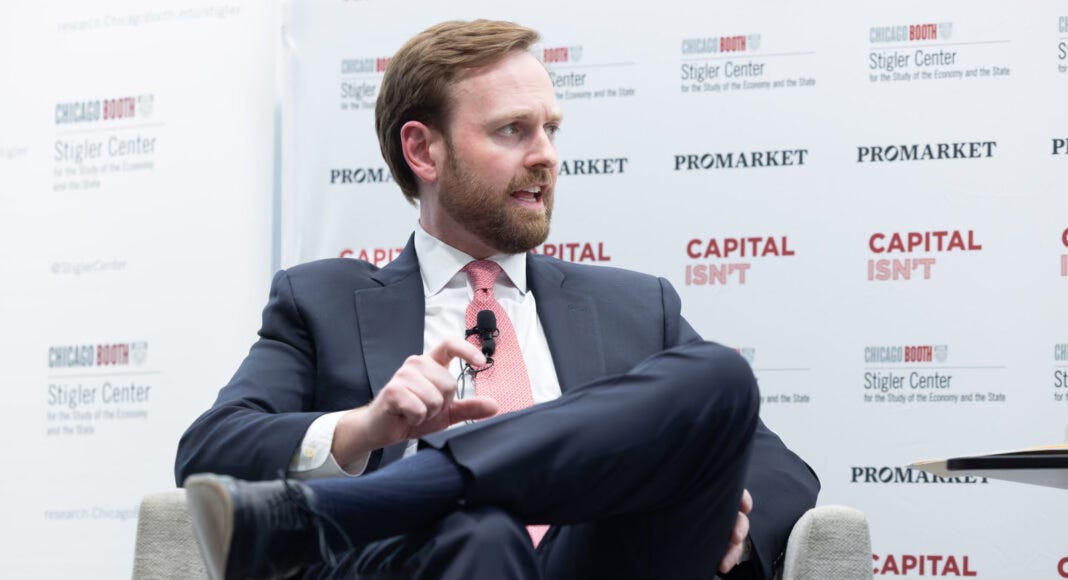
Ferguson told CNBC that, if companies are kicking people off platforms for holding particular views, “that could be an indication that there’s a competition problem ... and competition problems are my job.” An antitrust complaint against social-media platforms on content censorship would add one more authority to former FTC Chair Lina Khan’s expansion of antitrust to address a parade of grievances—the fate of inefficient competitors, correcting racial injustice, promoting labor unions—not found in antitrust law, precedent, or the powers Congress granted to the agency.
If Ferguson is considering managing speech through other FTC powers, perhaps a consumer-protection complaint, that too would insert government deeply into the management of speech. Courts have upheld the ability of the FTC to crack down on deceptive speech that is solely commercial. A company that advertises its face cream as a cure for cancer would have no First Amendment defense against serious legal jeopardy. But when people express opinions on political and social issues, or a media company exercises its speech rights to make its own editorial judgments, we are deep into the protective territory of the First Amendment—something that FCC Chairman Carr seemed not to care about in putting the weight of his agency behind the frivolous lawsuit against CBS.
The new ability of the government to question the editorial decisions of a news organizations opens the way to the regulation of thought. If a conservative expresses the opinion that cutting taxes will result in economic growth that will increase the tax base and thus increase tax revenue, is that a truth or a lie? If a liberal proposes billions of dollars for mass transit, arguing that it will pay for itself by reducing productive time wasted in a traffic jams, is that a truth or a lie? Either may be right or wrong. But Carr and the FCC and Ferguson and the FTC have no business adjudicating such questions.
Ferguson seems intent on mirroring the thinking of Tim Wu, who wrote that: “In an information industry the cost of monopoly must not be measured in dollars alone, but also in its effect on the economy of ideas and images, the restraint of which can ultimately amount to censorship.” Ferguson and Meador have made many statements that are reverse-image reflections of Wu. They mirror the Marcusian thinking that the problem with America today comes not from the government and the breakdown of constitutional principles, but the ownership of media.
Are a handful of companies truly constricting the nation’s ideas? This view is wrong on two counts. First, for all the overbearing presence of the large social media platforms, no social media company has anything close to a monopoly on the public’s attention, surely not as much as the three major networks did a few decades ago. If consumers are receiving one-sided information of the left or the right, it is not because of monopoly, but because that they are now free to click their own sources of news. Second, social media platforms run third-party content rather than content that they produce themselves. If these platforms remain free of a degree of government censorship, which they have been since January, we should be exposed to more ideas than ever before.
This is not to deny that there is much to Wu’s point that algorithms serve users content that they continue to favor, creating the dangers of left and right echo chambers. People choose what they want, that’s the essence of free speech. If there is a problem here, it is inherent to profit-seeking social media entities of any size. But government censorship and aggressive antitrust are solutions that are sure to yield far greater evils than echo chambers.
As Ari Cohn wrote about Andrew Ferguson’s gambit on FIRE’s website: “In reality, the Chair is angling to label editorial decisions he doesn’t like ‘unfair or deceptive trade practices.’” But consumer protection law is no talisman against the First Amendment, and the FTC has no power here. The simplified formulation of Ferguson’s argument is this: If social media platforms are not adhering to their content policies, or “consistent” (whatever that means) in their enforcement, they are engaging in “false advertising” that harms consumers. Calling something censorship doesn’t make it so, and framing content moderation as ‘unfair or deceptive trade practices’ does not magically sidestep the First Amendment… Content policies and moderation decisions made by private social media platforms are inherently subjective editorial judgments.”
There is a common misconception that social media companies and media outlets in general are obligated by the First Amendment to be fair and allow all to post. The First Amendment, as we have seen, only applies to the government. If they wanted to, Facebook could block every conservative, X could block every liberal, and Instagram could use AI to put a funny mustache on every image of President Trump or AOC. As the U.S. Supreme Court affirmed in Moody v. NetChoice, the First Amendment protects the right of social-media companies to select, order, and rank third-party posts as they see fit.
This is not to say, however, that conservatives who raise the First Amendment lack a point. These social media sites may not have a legal obligation to post someone’s content (unless you buy the FTC’s theory that their content moderation promises in the terms of service trumps the First Amendment). But given that a handful of social media platforms constitute so much of the national townhall, it is clear that they have a social and moral obligation to be open to the nation’s diversity of opinion.
Conservatives should take note of how social-media companies are acting now. X pioneered the freeing of moderation from government control. Meta is testing the “community notes” technology, first developed by X, to crowdsource facts in posts on Facebook, Instagram, and Threads. Meta also dropped its notoriously biased “fact checkers.” Google is changing its corporate culture, cracking down on the tail-wagging-the-dog demands by activist-employees.
You could say that Silicon Valley’s change of heart conveniently came about after the election of Donald Trump. Or you could attribute this change of heart to Trump’s exposure of the extent to which social media companies were intimidated by Lina Khan and the Biden censorship machine. Whatever the reason, once the boot was lifted from their necks, these companies have moved with alacrity to reform content moderation and allow conservatives a freer space.
Should we worry about the possible return of censorship? If the nation elects another progressive president, would social media companies shuck off their current penitential posture and fall back in line with the demands of government censors? The answer may well rest on whether media companies today knuckle under to Chairmen Carr’s and Ferguson’s evolving scheme to either use merger authority or the FTC’s consumer protection powers to regulate speech.
Perhaps a better and more durable solution to the threat of future censorship, or at least a protection against that threat, can be found in Section 230 of the Communications Decency Act. This law grants liability protection to internet companies for third-party posts. Those conservatives who speculate about removing this shield see it as a way to really stick it to social media platforms on which they’ve been mistreated. Such a move would also “stick it” to virtually every online service—from travel sites to review sites of all sorts. It would ensure that the social media that remains would become nothing but the most inane and utterly safe content to post. Anything edgy or political would be too risky to run.
But there is no reason why Congress cannot require social media companies to adhere to some basic standards of fairness and openness in exchange for their liability protection. It would be perfectly reasonable, for example, to require platforms to have clear policies for removing posts, to explain to the user why they’ve been deposted, and to give that user a ready means of appeal. We should also look to encourage social media companies to embrace this new era of greater openness to make receptivity to divergent political views a key element in their terms of service. We’ll take a closer look at this idea at the end of this chapter.
Such practices could prevent a return to censorship of the sort that still remains in Europe. Vice President J.D. Vance stood before European leaders to fiercely denounce Europe’s censorship disguised as crackdowns on “hate speech.” In the United Kingdom, the Public Order Act and other statutes have enabled police visits, investigations, and arrests of Britons for tasteless jokes. British citizens have been arrested for praying silently in the vicinity of an abortion clinic. In Germany, citizens can be prosecuted for “public insults against politicians,” “spreading malicious gossip,” “inventing fake quotes,” or even reposting “lies” online. For such “crimes,” Germans can be fined, have their devices confiscated, or even go to prison. Europe, Vance said, is in retreat “from some of its most fundamental values.” At home, President Trump’s executive order against censorship put a stop to America’s slide down that slippery slope.

This is what we cannot allow to happen in America. A true conservative—like a true liberal—holds the conviction that, over time, the combative process of competing claims will winnow out the truth. This may sound naïve in this age of polarized narratives, but we should hold fast to the hope that, with freedom, Americans will break through ideological silos to promote real, productive debates.
Conservatives more than anyone should be especially wary of going down the path Ferguson and Carr are exploring. If we extend the purview of antitrust law or consumer protection to govern speech, the next progressive administration will be handed a powerful weapon. You can count on progressive lawyers to invert principles of free speech protection into government-approved speech codes along the lines of those advocated by Tim Wu and Mary Anne Franks.
The Enduring Example of the ESG Speech Police
If Andrew Ferguson wants to use his powers to defend speech, he should take a harder look to the long-running antitrust violation called ESG—the environmental, social, and governance standards enforced by a network of big funds and nongovernmental organizations.
Until recently, large investors who managed a total of $70 trillion in assets were signed up with Climate Action 100+, a network of corporations and NGOs who coordinated to bring progressive environmental and social policies into the boardroom. Additional political and financial heft came from CalPERS, the activist pension fund for California public employees, as well as the pension funds of New Jersey and New York.
The initial goals of the ESG movement were commendable—a long-term commitment to slash carbon emissions and support equality with strong corporate governance. From the start, however, there was an iron fist beneath the green-velvet glove—large funds and businesses needed to be aligned or they would suffer bad ratings, reputational attacks, and shareholder lawsuits from activist organizations.
NGOs like As You Sow and Mercy Investment worked in this space to judge companies according to their ESG performance and wage activist campaigns to make them adhere to those standards. The two companies that manage almost all proxy-shareholder services in America, Institutional Shareholder Services (ISS) and Glass Lewis & Co., provide ESG ratings for companies. As the different parts of the ESG network began to coordinate, they worked as a cartel in the restraint of a legal trade, a violation of the Sherman Antitrust Act in plain sight.
Companies that made conscientious efforts to meet the standards saw less recognition and more reputational harm and legal threats with the moving of goalposts. One Fortune 500 oil and gas executive told me that his company’s commitment to steadily reduce carbon emissions was replaced by a flat demand to “align with Paris” and eliminate all such emissions by 2050. In other words, put yourself out of business. “You’d think they’d be happy with our ESG performance,” one executive, whose company had slashed emissions, told me. “But we’re besieged with proxy proposals and board fights.”
The ESG movement also enforced speech codes, persuading companies to adopt its vague rating standards according to Diversity, Equity, and Inclusion standards. ESG means higher energy prices for the working poor, and DEI ignores the actual economic needs of the working poor, while expanding the number of “stakeholders” deserving of a say in corporate policy, without distinguishing between contractual stakeholders (customers, employees, and suppliers) and non-contractual stakeholders (the community, the environment and “the planet”). Then ESG reframed the plain meaning of the principles, such as sustainability, to which corporate leaders agreed when joining. The ESG cartel expanded its list of demands from environmental goals into a progressive, partisan wish list. This is especially pernicious, twisting social responsibility to mean controlling the First Amendment—protected speech and political leanings of private companies.
For example, progressive shareholder advocate As You Sow filed a proposal in 2023 with the Coca-Cola Company seeking information on how laws restricting abortion would negatively impact the company. This was one of 31 such shareholder proposals involving abortion and “reproductive freedom” in that year. Regardless of one’s views on abortion, corporate leaders were left to wonder what it has to do with the management of their companies and future risks and returns. The cartel’s tenuous link between abortion and corporate earnings is that “companies succeed when employees thrive.” Which, somehow, means restrictions on abortion are a threat to the bottom line. Coca-Cola shareholders begged to disagree.
Many ESG initiatives originate with SEIU, the service employees’ labor union that for many years has been the nation’s largest funder of Democratic campaigns. More muscle comes from the large pension funds of big blue states that are dedicated to advancing progressive policies. No surprise, then, that progressive shareholder advocates last year filed ten proposals involving criticism of a company’s decision to donate to pro-life candidates (all of whom happen to be Republicans).
On the “S” side, one executive told me of his company’s stellar record for diversity and for providing jobs in low-income communities. But his company’s rating was severely downgraded because it donates money to free-market, business-oriented nonprofits. He was told by an NGO that “we disagree with your alignment” in political donations. As 21 Republican state attorneys general noted in an open letter to asset managers, some proposals would force companies to vet their donations through approved third parties. Such proposals, he said, “are focused on denying donations to Republicans.” The reasoning behind this effort is that donated funds given to Republicans are the same as “attacks on voting rights, efforts to deny climate change, and efforts to impose extreme restrictions on abortions.”
Sen. Ted Cruz put it succinctly: “That is not capitalism, that is abusing the market.”
Widespread resentment by corporate boards about the encroaching power of this cartel led to the widespread abandonment of ESG by most of corporate America, even by Blackrock. The election of Donald Trump cemented it. But two ESG offenders should attract the ire of Trump regulators for antitrust enforcement.
Antitrust and the Proxy Duopoly
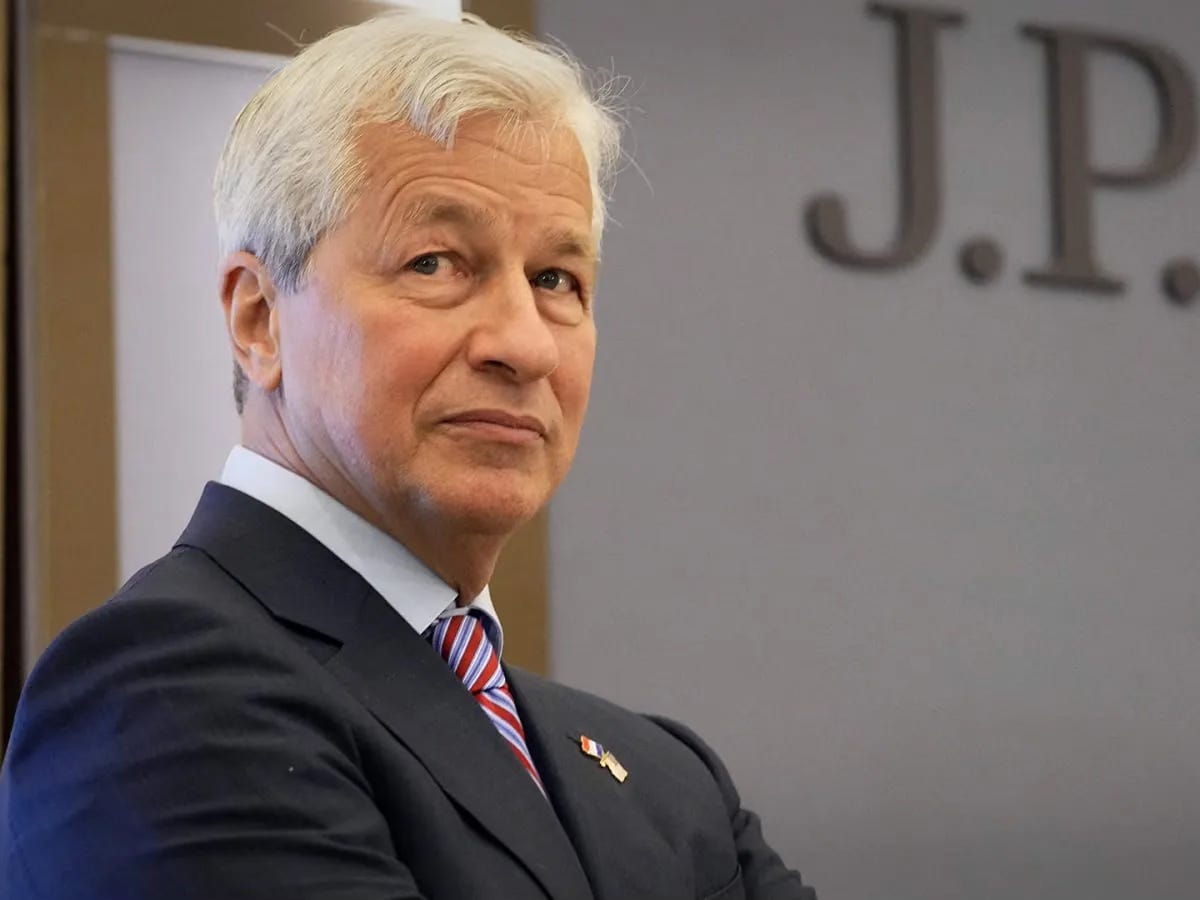
Jamie Dimon didn’t just say the quiet part out loud. He said the quiet part loudly.
For years, CEOs complained in private but minced around in public about the outrageous business model of ISS and Glass Lewis, that duopoly that has a stranglehold on the proxy advisory business.
The JPMorgan CEO, speaking at a BlackRock summit in Washington, D.C., called out the proxy advisory firms, demanding an end to their duopoly. Dimon called them “incompetent.” In 2023, the American Council for Capital Formation revealed 64 major complaints to the Securities and Exchange Commission about these firms making basic mistakes and issuing inaccurate proxy adviser recommendations. This is believed to be just the tip of the iceberg because companies, unlike their proxy advisors, must assume legal liability to submit a filing to the SEC.
“They should be gone and dead,” Dimon said of ISS and Glass Lewis. “Done with.”
ISS, owned by Deutsche Börse, and Glass Lewis, owned by a Canadian private equity firm, together control 97% of the proxy advisory market in the United States. Incompetence is to be expected with a lack of competition. But these two firms deserve antitrust trust scrutiny for another reason. They exploit their position to create problems for their clients and then force them to buy the solutions.
Dimon called out their closeness to progressive NGOs, which rate companies on how left-wing trust fund babies judge them by their ESG metrics. Glass Lewis advises some of these activist investors in running campaigns against companies. ISS rates the ESG “performance” of companies. Then, when a company is found to be morally deficient by the proxy advisors on ESG and DEI (though these acronyms were largely dropped after the election of Donald Trump), these two companies sell them consulting services. What do those services do? They help companies defend themselves against such NGO-inspired proxy attacks.
In late 2025, President Trump issued an executive order directing the FTC, as well as the Securities and Exchange Commmission and Department of Labor, to increase oversight of proxy advisors and assess their practices. President Trump directed FTC to work with the Attorney General to assess whether proxy advisors “engage in unfair competition or deceptive acts (e.g., collusion, conflicts of interest, inaccurate information, or other factors that prevent investors from making informed decisions.)”
Could Chairman Ferguson face a clearer cause to launch an antitrust action? Two firms dominate a must-have service for all public companies. By the admission of one of their top customers, Jaime Dimon, they are incompetent. These two firms work with NGOs to manufacture problems for their clients. Then they sell them the fix.
The FTC complaint practically writes itself.
Freedom and the Rule of Reason
Even with an administration aggressively ending government censorship, it would be a mistake to declare victory. The mechanisms of censorship could be easily reconstituted by a future president. The same people who deplatformed Donald Trump are still running the major social media platforms. The impulse to silence conservative voices remains strong among elites in both the mainstream media and many likely returnees from the revolving door back into top jobs in the next progressive administration.
But it would also be a mistake to ignore what has been achieved. Donald Trump’s return to the White House upended and destroyed the federal censorship machine for now, with entities like the State Department’s Global Engagement Center swept into history’s dustbin. The FBI under Director Kash Patel is comprehensively out of the censorship business, and the bureau is not likely to forget the painful backlash for once having engaged in it. Silicon Valley has acknowledged its abuses and made structural changes to content moderation, such as the adoption of a community approach to vetting facts—allowing many people representing all points of view to debate the truthfulness of a post, rather than trusting a faceless factchecker to decide for us all what is true and what is not.
It would be a monumental act of self-defeat, then, for conservatives at this high point of their power to continue down the Khanservative path of expanding the thrall of progressive antitrust over all American business to get even with a handful of companies for past injuries. This would ultimately give regulators the means by which to bully all businesses, control the economy, and again censor speech.
The Trump Administration and Republican Congress are working to erect institutional and legal barriers to the federal agency interference we witnessed over the Biden years. Congress also needs to think through a way that would fully prevent a return to social media censorship, while respecting the First Amendment and the right of social media platforms to keep violent threats and obscenity off their sites.
A “User’s Bill of Rights” might be the way forward. An idea of what such a solution might look like can be seen in the Internet Platform Accountability and Consumer Transparency or PACT Act, sponsored in the last Congress by Sen. John Thune, Republican from South Dakota and now Senate majority leader, and Sen. Brian Schatz, Democrat of Hawaii. The PACT Act would modify Section 230, the law that gives platforms immunity from liability from third-party posts. Rather than to continue to gift this liability protection, the PACT Act would strike a grand bargain—in exchange for these protections, platforms would have to offer clear standards for content management, and give due process for users to challenge the removal of a post.
An ideal bill would be stronger. It could expedite adjudication on posts with partisan or political content. It could make the deliberative process of social media companies even more public. It could give groups that have been demonetized greater standing in court. There are such ways for conservatives—and speakers of all ideological stripes—to address censorship without handing what’s left of the free market over to government regulation through antitrust law.
We should require more transparency and accountability from Silicon Valley in the protection of speech. But if we turn antitrust enforcement into a steroidal gorilla to manage speech and content, we will be handing the next progressive president and his minions the perfect tool to enact socialism and turn speech protection once again into government-approved speech codes.
You will suffer, but you won’t be able to complain.